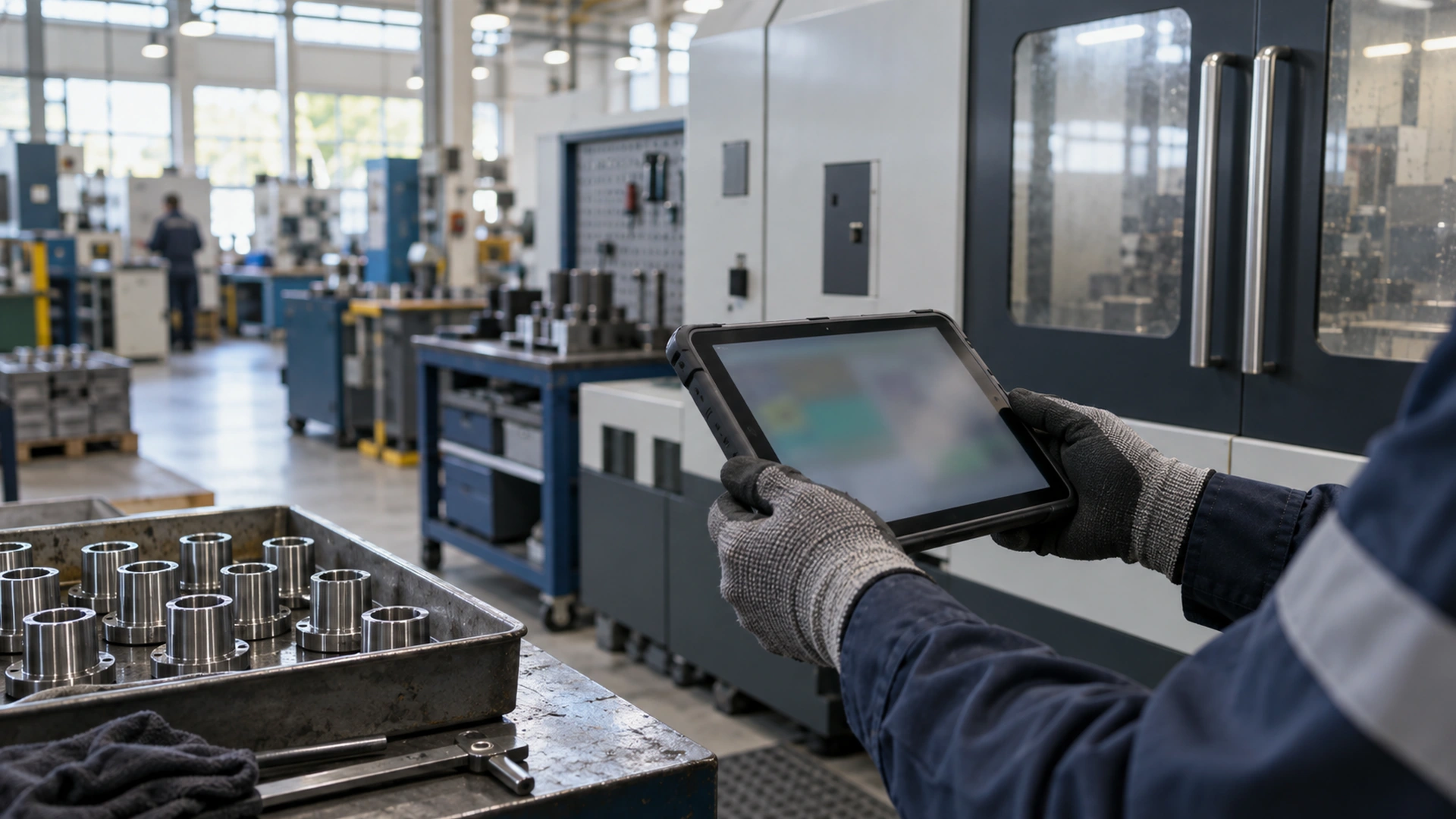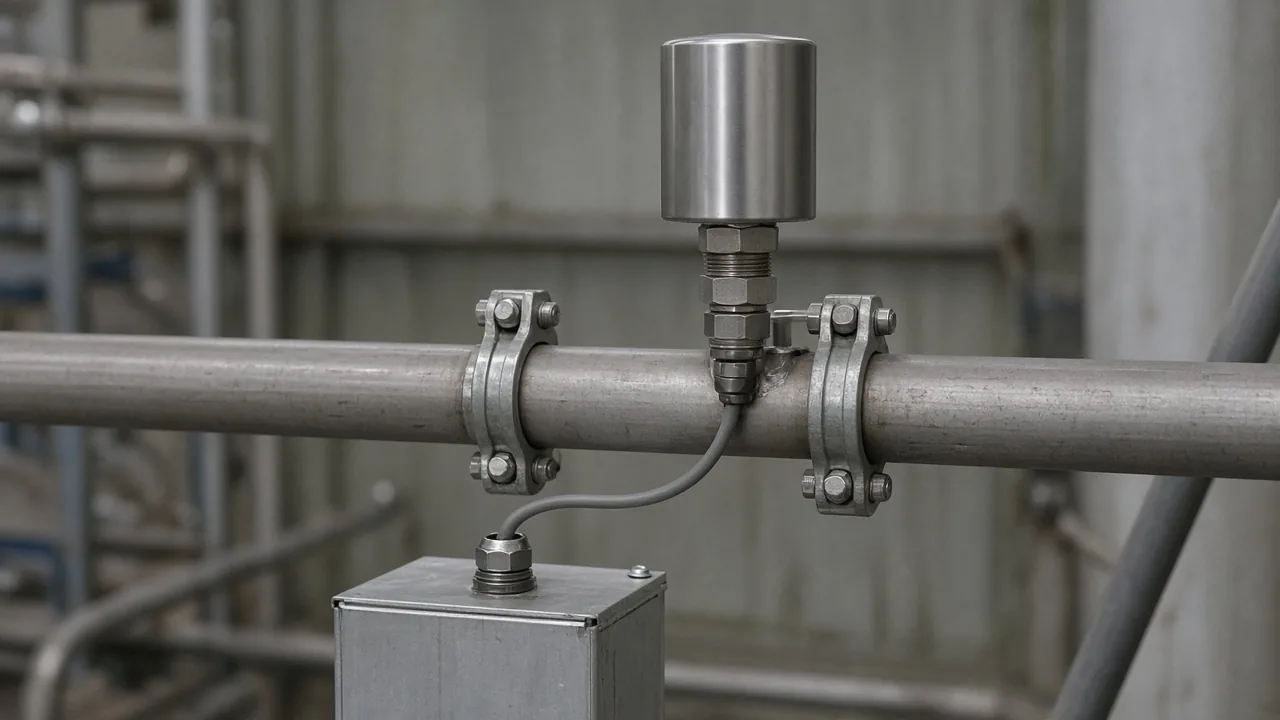
A failed monitoring path can leave a plant in downtime, with the machine still running, or in a degraded mode, and these sources do not assign one outcome to every plant. IBM’s 27 August 2026 definition uses industrial IoT for sensors, devices and software that collect and analyze industrial data, and NIST SP 800-82 Rev. 3 uses a control loop, with a sensor, a controller and actuators, to change the process. This page is for an owner or operations lead who has to tell those jobs apart before a project connects a machine. More tool explainers sit in Technology.
| Item | What the opened sources say | Why it changes the decision |
|---|---|---|
| Measurement | IBM: sensors collect data from assets such as a turbine blade or flow in a pipe. NIST: a sensor measures a physical property and sends that value on. | A displayed number is still a measurement until some defined part of the system acts. |
| Local control | NIST: the controller turns measurements, a control algorithm and set points into commands for actuators such as valves, breakers, switches and motors. | This is the step that changes the process. |
| Monitoring | NIST: a typical monitoring system has no direct connection between the sensors and any actuators. Values go to a station where a person analyzes them. | A remote view can exist without a closed control loop. |
| Wider network | IBM names Ethernet, Wi-Fi, cellular connectivity, or industrial protocols such as MQTT, as ways to move data. Inductive Automation says an MQTT server can sit in the cloud or on-premise. | The path is part of the design. These pages do not make a public internet link a requirement for every system. |
| Analysis | IBM: processing can run on an edge device or in a data center. MachineMetrics says machine data can be processed with edge computing or sent to a cloud platform. | The place of the calculation is what you lose if that place becomes unreachable. |
| Person on shift | NIST: people use a human-machine interface to watch status and history and to set parameters. Diagnostics and maintenance utilities are for preventing, identifying and recovering from abnormal operation. | A screen still needs a person with an agreed response. |
| Loop timing | NIST: supervisory and lower-level loops that run for the life of a process have cycle times on the order of milliseconds to minutes. Some systems need the computation close to the sensors and actuators. | The range is a general description in the September 2023 guide. It is not a rating for a named machine. |
| After a loss of the path | NIST: where failure has greater impact, systems often need redundant controls or a way to run in a degraded state. | The guide does not say every plant keeps running, and it does not say every plant stops safely. |
What does industrial IoT mean?
IBM, in a page published on 27 August 2026, defines the Industrial Internet of Things as the use of smart sensors, devices and software to collect and analyze data in manufacturing and industrial operations. The same page separates that from consumer IoT. A consumer sensor might measure heart rate. An industrial sensor might measure pressure or flow. IBM also says consumer applications may collect data every few minutes, while industrial applications must collect continuously and respond with low latency. The page does not give a latency number.
IBM then describes four steps: collection, communication, processing and analysis, and action. Collection is the sensor on the asset. Communication moves data among devices, controllers, gateways and software. Processing can happen on an edge device or farther away, in a data center. Action, in IBM’s examples, includes scheduling maintenance, issuing a work order, or alerting an operator through a computerized maintenance management system.
That last step is easy to misread as machine control. A work order changes what a person does next. An actuator command changes the process itself. Digital manufacturing on the factory floor is the companion page for tying a reading to a job and a maintenance decision.
Takeaway: Ask whether the proposed “action” creates a maintenance task or moves a valve, a breaker, a switch or a motor.
Where does a control loop differ from monitoring?
NIST SP 800-82 Rev. 3, September 2023, describes a typical operational technology system as control loops, human-machine interfaces, and remote diagnostics and maintenance tools. In a control loop, the sensor sends a measurement to the controller. The controller applies an algorithm and a set point and sends manipulated variables to the actuators. The actuators change the process.
The same section draws a monitoring system differently. There, the guide says, there are generally no direct connections between the sensors and any actuators. Sensor values go to a monitoring station for a person to analyze. NIST still treats that arrangement as operational technology, with a human in the loop, because the point is to notice a condition and then mitigate it. The examples are a forced door that sends someone to look, and a high temperature in a room that leads a person to start an auxiliary cooling unit.
People use the human-machine interface to monitor the process, change set points and algorithms, and see status and history. Diagnostics and maintenance utilities are how the system is supposed to prevent, identify and recover from abnormal operation. The guide also says supervisory and lower-level loops can be nested, and that those loops run continuously with cycle times on the order of milliseconds to minutes. Where people cannot meet the timing, NIST says automated controllers may be necessary, and some systems need computation close to the sensors and actuators so the control action happens on time.
A SCADA arrangement in the same guide shows both jobs in one system. Field information is collected, sent to a control center and shown to an operator, who can monitor or control from that center. The local remote terminal unit or programmable logic controller controls the local process. An intelligent electronic device can carry local programming that allows it to act without a direct instruction from the control center. Control of a given task can be automatic or it can be an operator command. Which one applies is a property of that system.
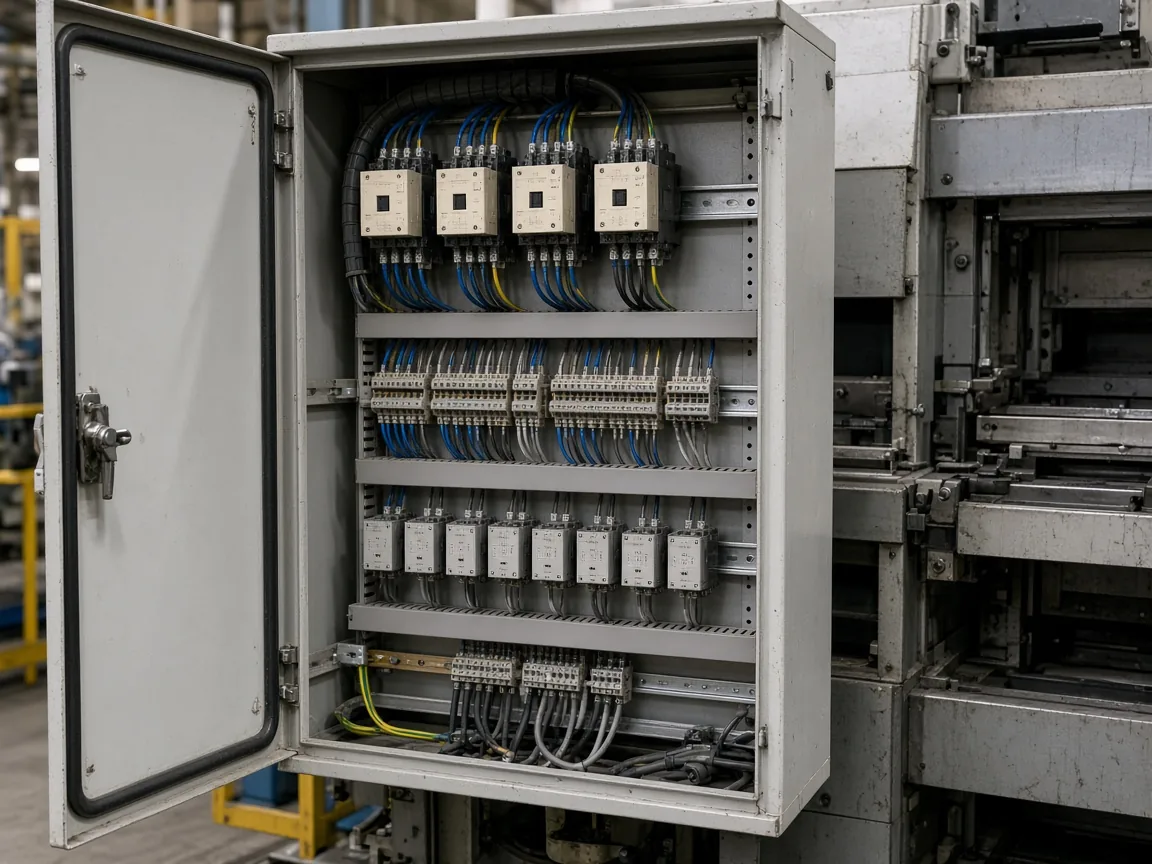
Common mistake: Treating the cabinet in the photo as proof of a closed loop. The picture shows hardware in a cabinet. It does not show which wires command an actuator and which wires only report a measurement.
Takeaway: Name the device that commands the actuator, and name the device that only displays the measurement.
How is IoT used in industrial automation?
On the pages read here, IoT shows up as the path that carries measurements, and sometimes commands, between field devices and a higher station. MachineMetrics describes industrial IoT as embedded sensors that capture and analyze machine data so networked industrial control systems can be used to improve operations. The same page says that data can be processed at the edge or sent to a cloud-based platform, and that a disruption can leave gaps in the data used for decisions. That sentence is about the data path. It does not say the machine stops.
Hitachi Vantara describes field devices sending data up to local process control, and that layer sending data on to supervisory control and data acquisition software. It also says a person with access can step in at each level. Hitachi writes that IoT and automation depend heavily on the internet. NIST, in the design section of SP 800-82 Rev. 3, also describes a small local PLC-controlled process as one end of geographic distribution, with pipelines and power grids at the other end. Inductive Automation says you can publish edge data to an MQTT server located in the cloud or on-premise. IBM lists MQTT as one industrial protocol among Ethernet, Wi-Fi and cellular connectivity, not as the only path.
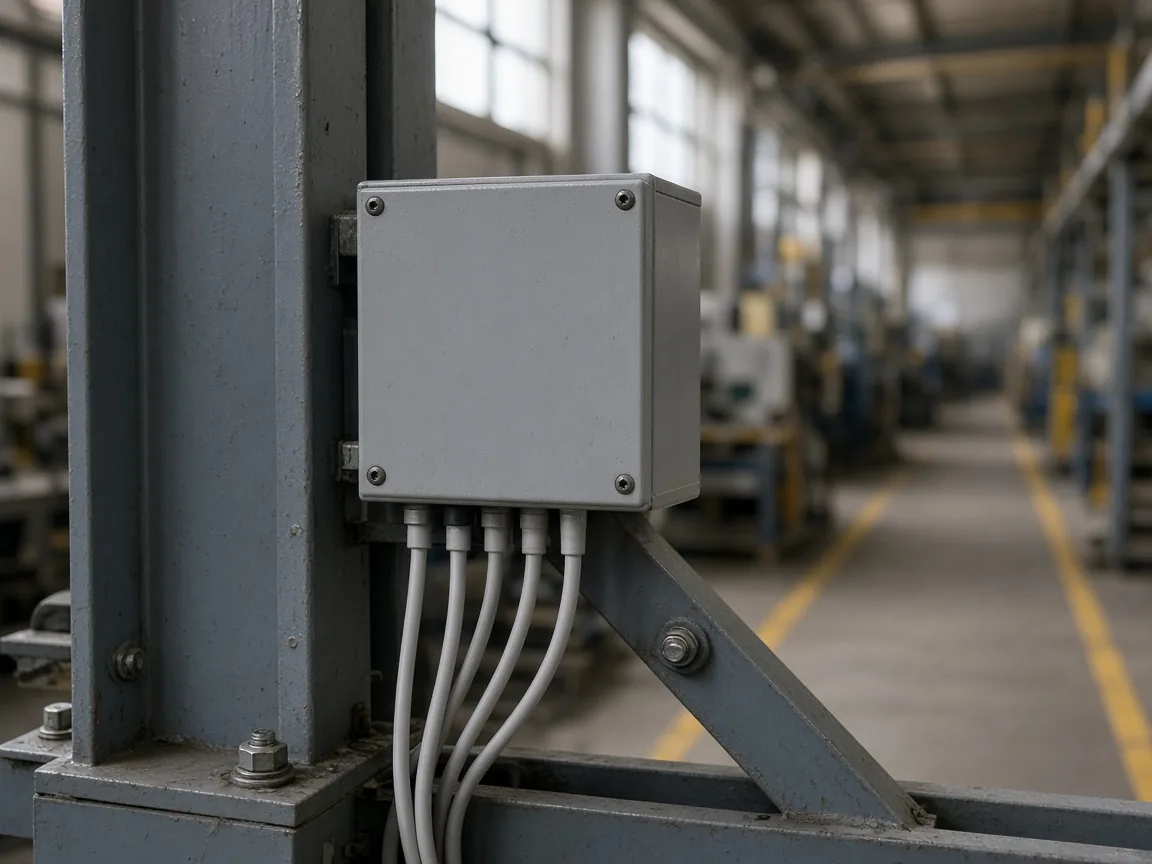
Inductive Automation also describes MQTT as emerging as a standard for industrial IoT because of a publish/subscribe model. That is the company’s characterization of the market, not a finding from NIST. This page does not rank protocols and does not add names the opened pages did not use.
Takeaway: Ask where the server or platform sits, and which messages are measurements and which messages are commands.
What are the four types of industrial automation?
Hitachi Vantara groups industrial automation into four arrangements. Fixed automation repeats one mechanical task. Programmable automation can be changed for a new product run, and Hitachi says that change costs programming time and expertise, without giving a figure. Flexible automation adjusts during a job. Hitachi names computer-controlled machine tools as an example. Integrated automation connects systems across a plant, which Hitachi illustrates with computer-aided manufacturing and with factories that share data for decisions such as resupply.
Those four names describe how often the machine’s task changes and how widely systems are connected. They do not tell you whether a new box only reports condition. A fixed machine can run its task with the controller it already has. An integrated plant can still keep actuator commands on the local controller. The label on the proposal is not the boundary.
What should you ask when communication stops?
NIST says the impact of a failed control function differs by domain, and that systems with greater impact often need redundant controls or a degraded mode. The guide does not fill in, for an unnamed plant, which loops keep running. MachineMetrics says a disruption can leave data gaps. IBM says more connectivity creates more paths into the industrial system, and that companies should separate operational technology networks from corporate IT networks when they can, with strong authentication and role-based access. None of those sentences is a wiring instruction.
The first table records only what those pages support. Empty cells stay empty.
| Layer | While the path is up | If the path stops | When the path returns |
|---|---|---|---|
| Sensor | Measures a physical property and sends the value to a controller or a monitoring station (NIST SP 800-82 Rev. 3). | ||
| Local controller | Turns the measurement, the algorithm and the set point into actuator commands (NIST). A local intelligent electronic device can act without a control-center instruction (NIST). | ||
| Gateway or wider network | Moves data. IBM names Ethernet, Wi-Fi, cellular connectivity or protocols such as MQTT. Inductive Automation places an MQTT server in the cloud or on-premise. | ||
| Analysis | Can run on an edge device or in a data center (IBM, 27 August 2026; MachineMetrics). | MachineMetrics says a disruption can leave gaps in the data used for decisions. | |
| Person on shift | Watches status and history on the human-machine interface and can change set points (NIST). |
NIST says diagnostics and maintenance utilities are used to prevent, identify and recover from abnormal operation. The passage does not say which of those utilities still work after a given network break, so the return column above is blank.
The next table is a checklist. The answer column is blank on purpose.
| Question for the engineer | Answer in the plant documents |
|---|---|
| Which control loops keep running when the wider network is down? | |
| Which loops stop? | |
| Which screens and alarms go dark? | |
| Who is told, and by what signal that does not use the failed path? | |
| After the path returns, who may change a set point, and from which screen? | |
| Which unsafe conditions must the local system detect and act on without that path? |
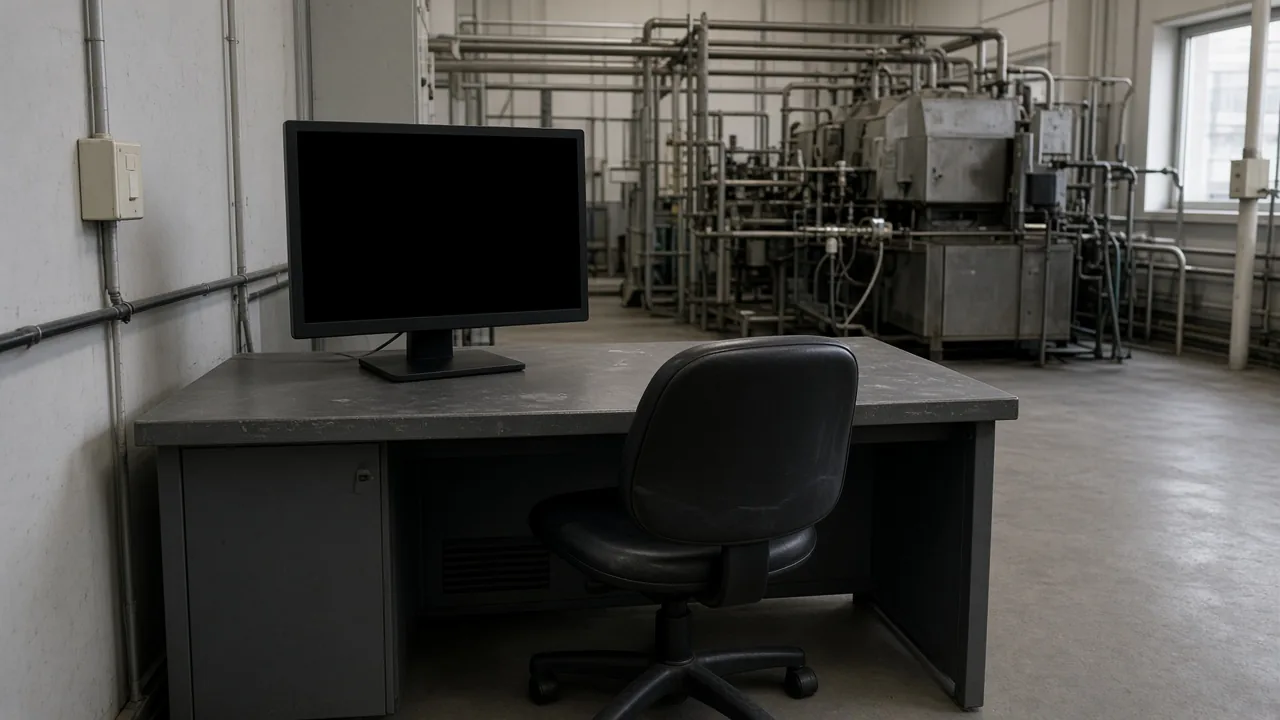
The photograph shows a powered-off screen in a factory room. It does not show a network failure, a stopped machine or a safe shutdown.
Takeaway: Leave the interruption cells blank until the engineer fills them from the architecture you actually have.
Where this does not hold
Use the tables as a way to ask questions. They are not a control-system design, a wiring diagram or a safety certificate. NIST says that in most safety-critical operations, human oversight of a dangerous process is essential, and that the system must be able to detect an unsafe condition and trigger an action that returns it to a safe one. This page does not specify that action for any plant.
The millisecond-to-minute range is NIST’s description of loop cycle times in general. It is not a promised response time for a product. IBM’s “low latency” has no number attached. Hitachi’s four automation types are that company’s grouping. Inductive Automation’s remark that MQTT is emerging as a standard is that company’s remark.
No model numbers, prices or measured speeds from vendor catalogs are used here. A vendor sentence about its own platform is labeled as that vendor’s account.
How we researched this
The passages above come from five public pages saved on 11 October 2026 and read again for this article on 14 October 2026: NIST SP 800-82 Rev. 3 (the control-loop, monitoring, human-machine interface, design-consideration and SCADA passages), IBM’s industrial IoT explainer, Inductive Automation’s IIoT page, MachineMetrics on IoT in manufacturing, and Hitachi Vantara on automation and IoT. We read those sections, not every page of the NIST guide, and we did not visit a plant or test a controller. The editorial policy states how this publication handles sources.
Takeaway: Treat the filled cells as quotations and paraphrases from those pages, and treat every blank cell as still open.