Treating a kiosk’s network heartbeat as proof that the terminal works can hide downtime from a frozen screen, a failed remote-view session or a jammed receipt printer. Before an organization tries to monitor kiosk devices remotely across multiple sites, it needs to separate the enrollment and permission prerequisites for starting a session from the states a remote screen can confirm and the physical checks that still require someone on site.
A remote management console can verify that a kiosk checks in over the network, enforce app allowlists, push software updates, and—when companion tools and operating-system permissions are pre-configured—view or control the screen and read supported hardware sensors. It cannot bypass operating-system screen-capture consent rules after a reboot, clear jammed thermal paper, re-seat a loose peripheral cable, or inspect a payment slot for physical tampering.
This guide is for operations leads and IT administrators managing multi-location self-service terminals or dedicated field devices. It provides two working tables compiled from platform and vendor documentation: a deployment prerequisites checklist and a copyable remote-inspection and on-site escalation matrix. It does not rank management software or guarantee unattended uptime. More operational explainers sit in Technology.
| Operational layer | What the opened sources describe | Why the distinction matters |
|---|---|---|
| Network heartbeat | Kiosk Industry (updated August 13, 2026): a ping showing the unit is powered on and connected to the internet. | Confirms power and IP reachability only; the user interface or peripherals can still be unusable. |
| Remote screen session | Hexnode Help Center (updated August 10, 2025): real-time screen viewing or interactive control via a companion app and open ports 443, 3478 and 5349. | Requires prior enrollment mode, helper app installation and OS screen-cast or accessibility permissions. |
| Foreground lockdown state | Android Developers: Lock task mode restricts the device to allowlisted packages and hides Home, Overview and notifications. Microsoft Learn (July 15, 2026): Assigned Access runs a single app above the Windows lock screen. |
Keeps users inside the approved app, and can block or hide system dialogs that would otherwise appear on screen. |
| Peripheral telemetry | Kiosk Industry (August 2026): component reporting such as printer paper-level sensors, bill-acceptor jams, internal temperature and 4G/5G failover signal. | Available only when the specific peripheral and driver expose those sensors to the monitoring agent. |
| Physical hardware & media | Kiosk Marketplace (March 8, 2010) and Faronics (June 16, 2016): physical faults, consumable reloads and payment-slot skimmer checks. | Requires a trained person at the terminal to inspect, clean, reload or repair the hardware. |
Why does a connected kiosk still reject a remote view session?
Enrolling a device in a management portal does not automatically grant live screen viewing once the terminal is locked into kiosk mode. That gap appeared clearly in a February 3, 2022 Hexnode community forum thread, where an administrator managing field workers’ Android kiosk devices tried to view a worker’s screen from the office to check enterprise app entries. Instead of opening a live view, the console returned the message "Remote View app is not installed on the device. Click here to install it now," and the remote installation attempt still could not start the session.
The vendor’s forum reply and its current Help Center documentation, Remotely View and Control Android Devices from a PC (updated August 10, 2025) and How to Configure Android Kiosk Mode, show why a remote session depends on how the device was provisioned before deployment:
- Enrollment mode governs silent installation. Under Android Enterprise, Hexnode’s kiosk activation and silent installation of the companion
Hexnode UEM Remote VieworHexnode Assistapp require the device to be enrolled asDevice Owner(or run on supported OEM system-agent platforms such as Samsung Knox, LG GATE or Kyocera business phones). In Android Developers’ Dedicated Devices documentation, silent package installation (PackageInstaller) without user interaction likewise applies to fully managed devices running Android 6.0 (API level 23) or higher, which are provisioned starting from a factory reset. On devices enrolled without Device Owner privileges, someone holding the device must manually accept the installation prompt. - Kiosk lockdown hides prompts unless configured. When Android runs in lock task mode (Android 5.0 / API level 21+), the system hides the status bar, notifications and Home and Overview buttons, and only apps allowlisted via
DevicePolicyManager.setLockTaskPackages()can run. If a Device Policy Controller also applies theDISALLOW_CREATE_WINDOWSuser restriction, background services cannot display toasts, dialogs or overlays in front of the kiosk app. In Hexnode’s console, administrators must explicitly enable both Remote View and the setting to prompt for the Remote View app while in kiosk mode. - Android 9.0+ screen-capture consent resets when the helper app stops. Hexnode’s August 2025 documentation notes that on Android 9.0 and above, the operating system prompts the user on the device screen (
"Start recording or casting with Hexnode Assist?") every time the companion app stops running in the background. After a device restart or if battery optimization kills the background process, a remote administrator cannot view the screen until someone at the device taps to grant consent. - Interactive remote control requires a separate permission from viewing. Outside direct Samsung Knox integration, taking touch control of an Android device in Hexnode requires enabling the device’s
Accessibility Servicefor the helper app on the unit itself, and Hexnode notes that remote control may not work as intended below Android 7. - Screen lock and Windows Remote Desktop limits block remote viewing. On Android, Hexnode states that if a device locks during or before a session, the administrator cannot see the screen until someone unlocks it on site. On Windows 10 and Windows 11, Microsoft Learn’s Assigned Access overview (updated July 15, 2026) states that a kiosk account must sign in from the local console and that the kiosk experience is not supported over a Remote Desktop connection.
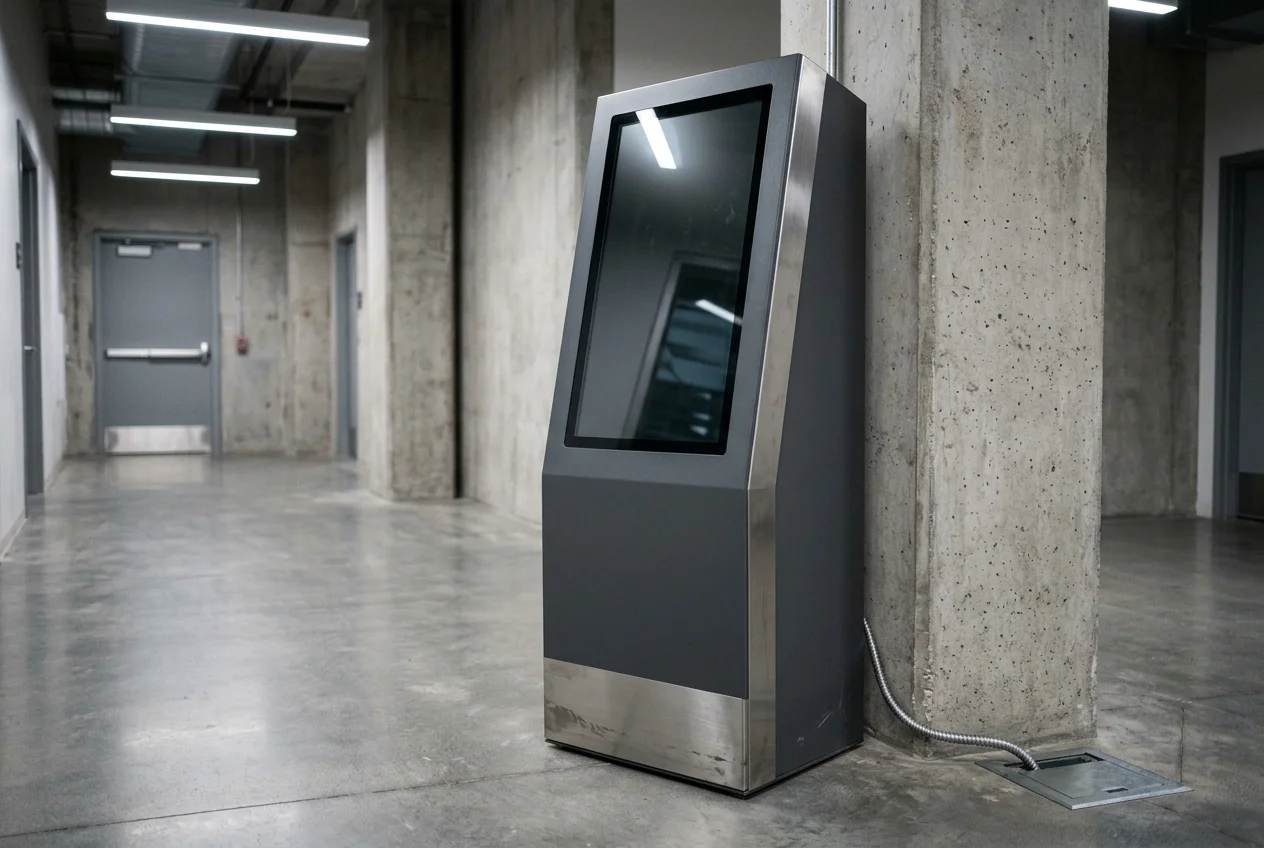
Check these deployment and permission prerequisites on a test unit before placing devices in remote locations:
| Prerequisite | Platform or source rule | What fails if skipped before deployment | Bench check before rollout (fill in) |
|---|---|---|---|
Full device management (Device Owner) |
Android Developers: dedicated devices are provisioned from a factory reset as fully managed devices; silent APK install requires Android 6.0+ fully managed admin. Hexnode: Android Enterprise kiosk and silent helper install require Device Owner (or supported OEM agent). |
Helper apps or updates require a person at the kiosk to tap install prompts; on Android 10+ Device Admin devices, default home launcher permissions must be granted manually on site. | |
| Kiosk allowlist & window rules | Android Developers: setLockTaskPackages() allowlists kiosk apps; DISALLOW_CREATE_WINDOWS blocks overlays from other apps. Hexnode: enable Remote View and kiosk-mode prompt option in portal settings. |
The companion remote-view app cannot launch or display its permission dialog over the locked kiosk interface. | |
| Screen-cast consent persistence | Hexnode Help Center (updated August 10, 2025): on Android 9.0+, user consent is requested again whenever the Remote View app stops running in the background or after a device restart. | After a power cycle or app crash, the remote session hangs waiting for someone at the kiosk to tap "Start Now". |
|
| Battery optimization & wake settings | Hexnode: disable battery optimization for management and helper apps. Android Developers: use FLAG_KEEP_SCREEN_ON or STAY_ON_WHILE_PLUGGED_IN (BatteryManager AC/USB/wireless flags) to keep the screen awake. |
The OS puts the background helper to sleep or locks the screen, cutting off remote viewing until a local user unlocks the unit. | |
| Interactive control permission | Hexnode Help Center: standard Android remote control requires enabling Accessibility Service for the helper app on the device (Android 7+). |
The administrator can see the screen (if view consent is active) or connect to the portal, but cannot simulate taps remotely. | |
| Windows local console sign-in | Microsoft Learn (updated July 15, 2026): Assigned Access requires User Account Control (UAC) enabled and local console sign-in; kiosk experience is not supported over Remote Desktop. | Attempting to verify or operate the single-app kiosk interface via standard Windows Remote Desktop fails to load the kiosk session. | |
| Firewall & transport ports | Hexnode Help Center: keep Port 443 (HTTPS), Port 3478 (TCP/UDP) and Port 5349 (TCP) open. |
Device inventory check-ins over HTTPS (443) succeed while live screen streaming (3478/5349) fails to connect. |
Takeaway: Test a full power cycle on the bench and try to connect without touching the screen; if the session waits for a local tap, record who will provide that tap at the site.
What can a remote session or health check actually confirm?
Once a kiosk is properly enrolled and its communication paths are open, remote monitoring tools can confirm several distinct layers of software and hardware state. In Kiosk Monitoring - Remote Monitor (published February 8, 2024, updated August 13, 2026), trade publication Kiosk Industry separates basic reachability from deeper health telemetry across the software and hardware stack.
First, operating-system and lockdown stability can be verified remotely. On Android dedicated devices, Android Developers documents that a Device Policy Controller can query ActivityManager.getLockTaskModeState() to confirm whether LOCK_TASK_MODE_LOCKED is active, receive onLockTaskModeEntering() and onLockTaskModeExiting() callbacks, and apply DISALLOW_SYSTEM_ERROR_DIALOGS (in Android 9.0 / API level 28+) so crashed or unresponsive apps restart automatically instead of leaving an error dialog on the public screen. On Windows 10 and 11, Microsoft Learn notes that Assigned Access automatically restarts the single-app kiosk application if it closes. Kiosk Industry adds that remote monitoring software tracks CPU spikes, memory leaks, available disk space and whether the lockdown shell remains in the foreground.
Second, power and network path status can be monitored when the operating system or hardware exposes them. Android Developers’ cookbook explains that a dedicated device app can register for BatteryManager broadcasts to check whether the terminal is plugged into an AC charger, USB port or wireless charger and send a remote alert if the device becomes unplugged. Kiosk Industry notes that remote management tools can also track 4G/5G cellular failover signal strength and internal cabinet temperatures or fan speeds on outdoor or ruggedized enclosures.
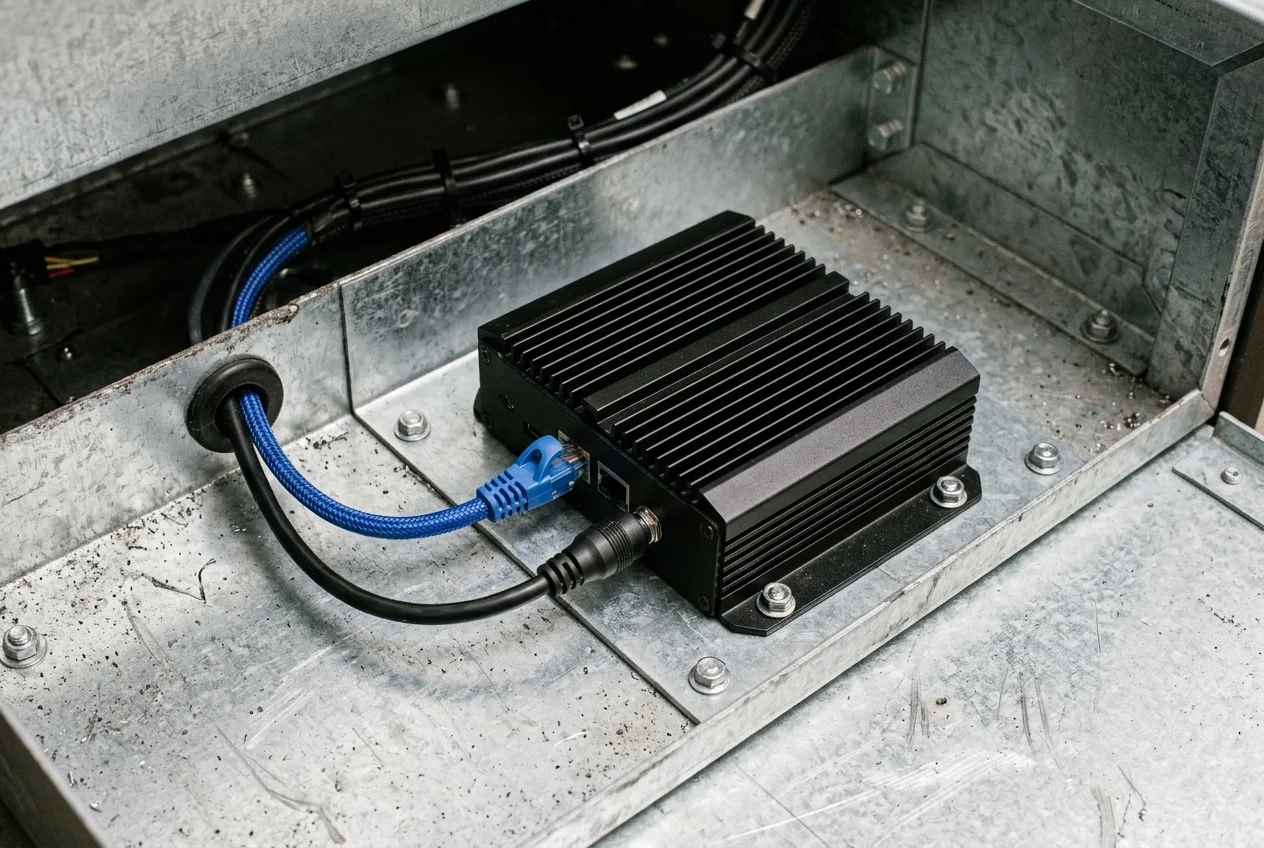
Third, remote maintenance and recovery actions can resolve software-level faults without dispatching a technician. In a March 8, 2010 Kiosk Marketplace commentary (Four ways to grow with remote management), Esprida director Asad Jobanputra describes using centralized remote management to distribute operating-system patches, software updates and promotional content across multi-site deployments, and linking monitoring data to open and close tickets in internal helpdesk systems. In a June 16, 2016 vendor post (Retail: How to Maintain Self-service Kiosks), Faronics describes combining application whitelisting and endpoint lockdown (such as disabling exposed USB ports) with scheduled “reboot to restore” maintenance windows to wipe unauthorized changes between shifts. On Android dedicated devices, Android Developers also documents that administrators can suspend over-the-air (OTA) system updates for up to 90 days to freeze the OS version during busy periods, and push remote app configurations through managed configurations.
How those monitoring signals differ from automated physical actuation is the same boundary examined in our guide to separating industrial IoT monitoring from local control loops, and how equipment signals tie into work orders and maintenance records is covered in what digital manufacturing means on the factory floor.
Takeaway: Use remote monitoring to verify process state, power source, lockdown integrity and sensor alerts, and use remote reboots or scheduled restore cycles for software recovery—not as proof that physical transactions are succeeding.
Which kiosk problems still require an on-site check?
Kiosk Industry states the core operational trap plainly in its August 2026 guide: a kiosk can report “online” on a network heartbeat while being completely unusable if its thermal printer is jammed, its credit card reader is disconnected, or its touch interface is frozen on an error dialog. Even when peripheral sensors report paper levels or jam flags, three categories of failure still require a person at the machine.
1. Mechanical media faults and consumable replacement. A remote dashboard that receives a low-paper or cutter-jam alert from a thermal printer sensor can open a helpdesk ticket, as Kiosk Marketplace and Kiosk Industry describe, but it cannot load a fresh roll of thermal paper, pull a torn receipt strip out of a platen roller, or clean dust and adhesive buildup off a printhead or bill acceptor. Moreover, if a USB or serial peripheral does not report detailed health codes to the host agent, the remote console may show the host PC running normally while every printed receipt fails.
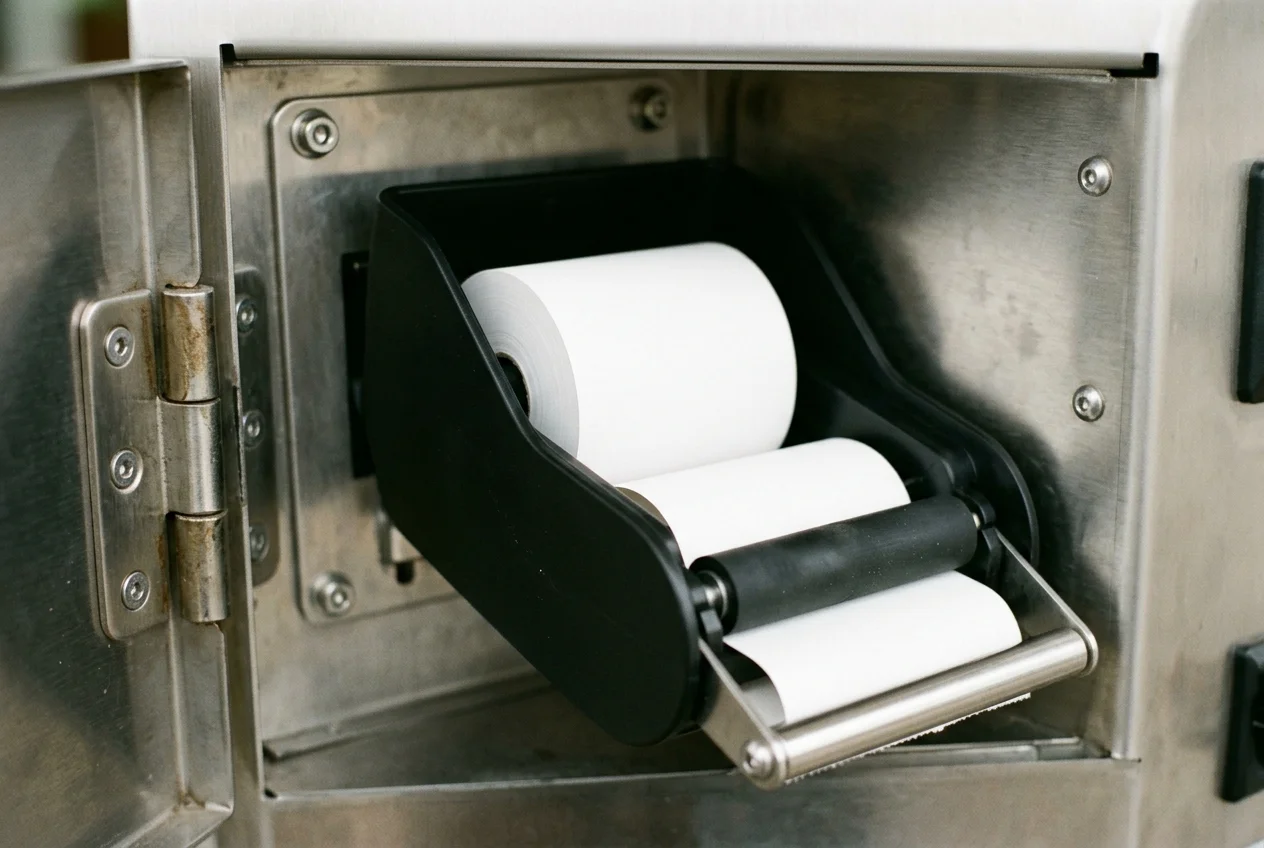
2. Unattended session blocks after power loss or OS lock. As Hexnode’s August 2025 Android documentation specifies, if an Android 9.0+ kiosk restarts or its remote-view helper app is stopped in the background, the operating system requires someone on the device end to grant screen-recording consent before an administrator can view the screen again. Similarly, if the device screen locks, or if a Device Admin enrolled Android 10+ unit loses its default home launcher assignment during kiosk re-activation, an on-site staff member must unlock the unit or confirm the launcher prompt.
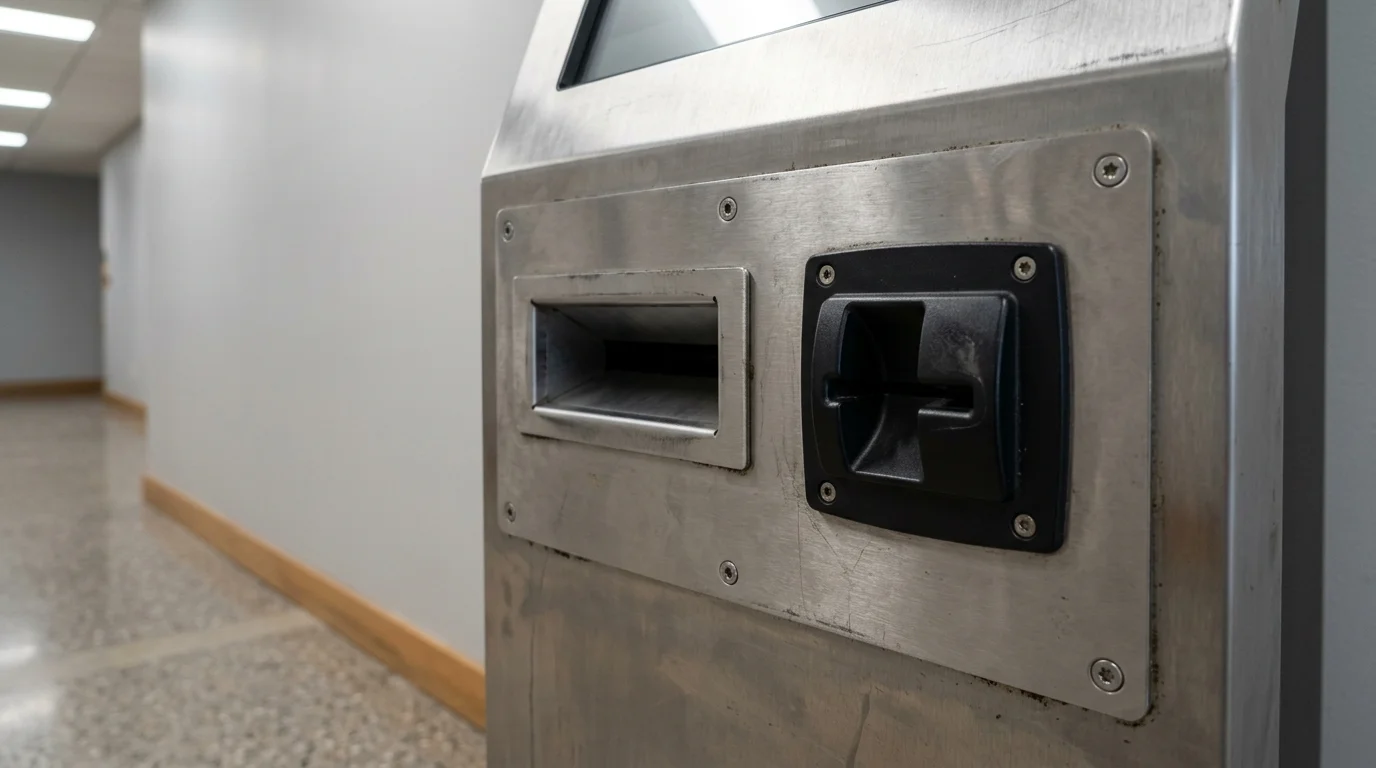
3. Physical tampering, cable disconnects and touch degradation. Faronics notes in its retail kiosk post that unattended terminals face physical threats alongside software faults, citing point-of-sale payment units rigged with card-stealing skimmers as well as people attempting to plug flash drives into exposed USB ports. Locking down USB ports in software addresses unauthorized drives, but checking whether a physical skimmer overlay has been attached to a card bezel, whether a card slot is blocked by debris, or whether a touchscreen digitizer registers touches accurately across every corner requires physical inspection. Where software tools propose automated maintenance or configuration changes across a fleet, the boundary on where human approval still matters for software agents applies before pushing disruptive actions to active sites.
Common mistake: Closing a helpdesk ticket as “resolved” immediately after a remote reboot brings the kiosk’s heartbeat back to green. If the ticket was opened because receipts were not printing or cards were not reading, a green heartbeat after reboot does not confirm the peripheral works.
Takeaway: Pair every remote reboot or peripheral alert with a rule defining when local staff must run a physical test transaction or inspect the enclosure.
Copyable worksheet: remote check and on-site escalation matrix
When an organization manages kiosks across multiple branches, offices or field sites, the recurring failure is ambiguity over where remote troubleshooting stops and local responsibility starts. Copy the matrix below into your operations runbook. The first three columns summarize what the opened documentation supports; the last two columns are intentionally left blank for your team to record the specific peripheral sensors, local staff role and escalation window for each site.
| Check state | What the remote console can confirm | What remains unproven remotely | On-site action required when check fails | Local owner, test step & ticket record (fill in for your fleet) |
|---|---|---|---|---|
1. Network reachable (Heartbeat) |
Device is powered on and communicating with the management server over IP (Kiosk Industry, August 2026). | Whether the kiosk app is running, whether the screen is dark or locked, or whether any peripheral works. | Check wall/floor power, physical Ethernet or cellular antenna connection, and cabinet breaker. | |
| 2. Remote screen view permitted | Companion app is installed, ports 443, 3478 and 5349 are open, screen is unlocked, and OS screen-cast consent is active (Hexnode Help Center, August 2025). | Whether physical touch input works across the glass or whether external hardware slots are obstructed. | Unlock the screen, tap the Android 9.0+ screen-cast consent prompt if restarted, or sign in at the local Windows console (Microsoft Learn, July 2026). | |
| 3. Foreground kiosk app responsive | Lock task mode (LOCK_TASK_MODE_LOCKED) or Windows Assigned Access is active; CPU, memory and disk space are within limits (Android Developers; Microsoft Learn; Kiosk Industry). |
Whether a backend transaction completes end-to-end with physical media output. | If a remote app restart or reboot does not clear a freeze, verify local display output and touch response at the glass. | |
| 4. Peripherals operational (printer, card reader, scanner) | Only the telemetry flags exposed by the hardware and driver—such as paper-low, cutter-jam or USB connection status (Kiosk Industry, August 2026). | Print legibility, clean paper feed over the tear bar, physical card insertion smooth travel, and absence of external skimmer overlays (Faronics, June 2016). | Open the service door to clear jams or load paper, re-seat loose internal cables, inspect the card bezel for tampering, and run one test print or scan. | |
| 5. Escalation & sign-off record | Time of alert, remote commands issued (such as reboot or policy push), and portal session log (Hexnode Help Center; Kiosk Marketplace, March 2010). | Whether the customer-facing workflow actually succeeded after the remote action. | Record who inspected the terminal on site, what physical fix was performed, and whether a test transaction passed before closing the ticket. |
For a hypothetical example of how to use this worksheet: suppose an organization operates 25 check-in kiosks across regional clinics, and one terminal shows “online” in the portal while local reception reports that patients cannot check in. Following the matrix:
- In Row 1 (Heartbeat), the remote administrator sees the terminal is online and plugged into AC power.
- In Row 2 (Remote screen view), the administrator starts a remote view session; because the Android device was enrolled as
Device Ownerand had not rebooted since consent was granted, the screen opens and shows the check-in app responsive in Row 3. - In Row 4 (Peripherals), the badge printer reports no USB disconnect error, so the remote administrator cannot tell why badges fail to emerge. Rather than repeatedly rebooting the terminal from the office, the administrator triggers the Row 4 and Row 5 handoff: a designated desk lead unlocks the printer door, finds the thermal roll installed upside down, flips the roll, prints a test badge, and logs the test result on the helpdesk ticket before closing it.
Takeaway: Never close a user-reported kiosk fault on a green heartbeat alone; require a matching confirmation at the layer where the failure occurred.
Where this does not hold
Treat the prerequisites table and escalation matrix as an operational boundary check, not a universal manual for every kiosk platform:
- Product and OS rules change by version and vendor. The
Admin > General Settings > Remote View & Control Settingsmenu path, companion app names (Hexnode UEM Remote ViewandHexnode Assist), and ports443,3478and5349come from Hexnode’s February 2022 forum response and its August 10, 2025 Android help documentation. Other mobile device management platforms, custom Android Device Policy Controllers, Linux kiosks and Windows tools use different agents, ports and OEM plugins. Always verify the current documentation for your exact OS build and MDM version before deployment. - Peripheral visibility depends on hardware wiring and drivers. Kiosk Industry describes RMM tools tracking paper levels and bill-acceptor jams, while Impact Components’ hardware catalog lists industrial features such as hardware watchdogs and
ccTalkmoney-transaction interfaces. A kiosk only reports those states remotely if both the peripheral hardware and the software agent support them; otherwise, peripheral health remains invisible to the remote portal. - Historical cost and survey numbers are not current benchmarks. The March 2010 Kiosk Marketplace article cites a 2009 consumer survey and a “$200 service call” example, Faronics’ June 2016 blog cites a 2020 market forecast, and Kiosk Industry’s August 2026 article uses illustrative figures for software hangs and payback periods. This publication excludes those numbers from its factual conclusions because they do not establish what a given organization will spend or save today.
- This worksheet is not a security audit or payment compliance standard. Mentioning physical skimmer checks (from Faronics) or antivirus/software lockdown monitoring (from Kiosk Industry) does not cover PCI DSS inspection procedures for unattended payment terminals, which require their own compliance documentation.
How we researched this
To build this guide, we started from the February 3, 2022 Hexnode community forum thread on monitoring Android kiosk devices remotely and cross-checked it against Hexnode’s current Help Center documentation on Android Remote View and Control (updated August 10, 2025) and Android Kiosk Mode (accessed October 17, 2026). We paired those vendor documents with official platform guides from Android Developers (Dedicated devices overview, Lock task mode, and Dedicated devices cookbook, accessed October 17, 2026) and Microsoft Learn (Assigned Access overview for Windows 10 and Windows 11, updated July 15, 2026). For multi-location maintenance boundaries and peripheral telemetry, we read Kiosk Industry’s Kiosk Monitoring - Remote Monitor explainer (published February 8, 2024, updated August 13, 2026), Kiosk Marketplace’s March 8, 2010 remote-management article, Faronics’ June 16, 2016 retail kiosk maintenance post, and Impact Components’ kiosk hardware overview.
We did not test management software on live kiosk hardware or audit field deployments; the two tables are this publication’s synthesis of the cited sources. Read our editorial policy for how we evaluate and cite technical documentation.
Takeaway: Use vendor and OS documentation to verify what your remote console can see, and keep a named on-site check for everything physical.