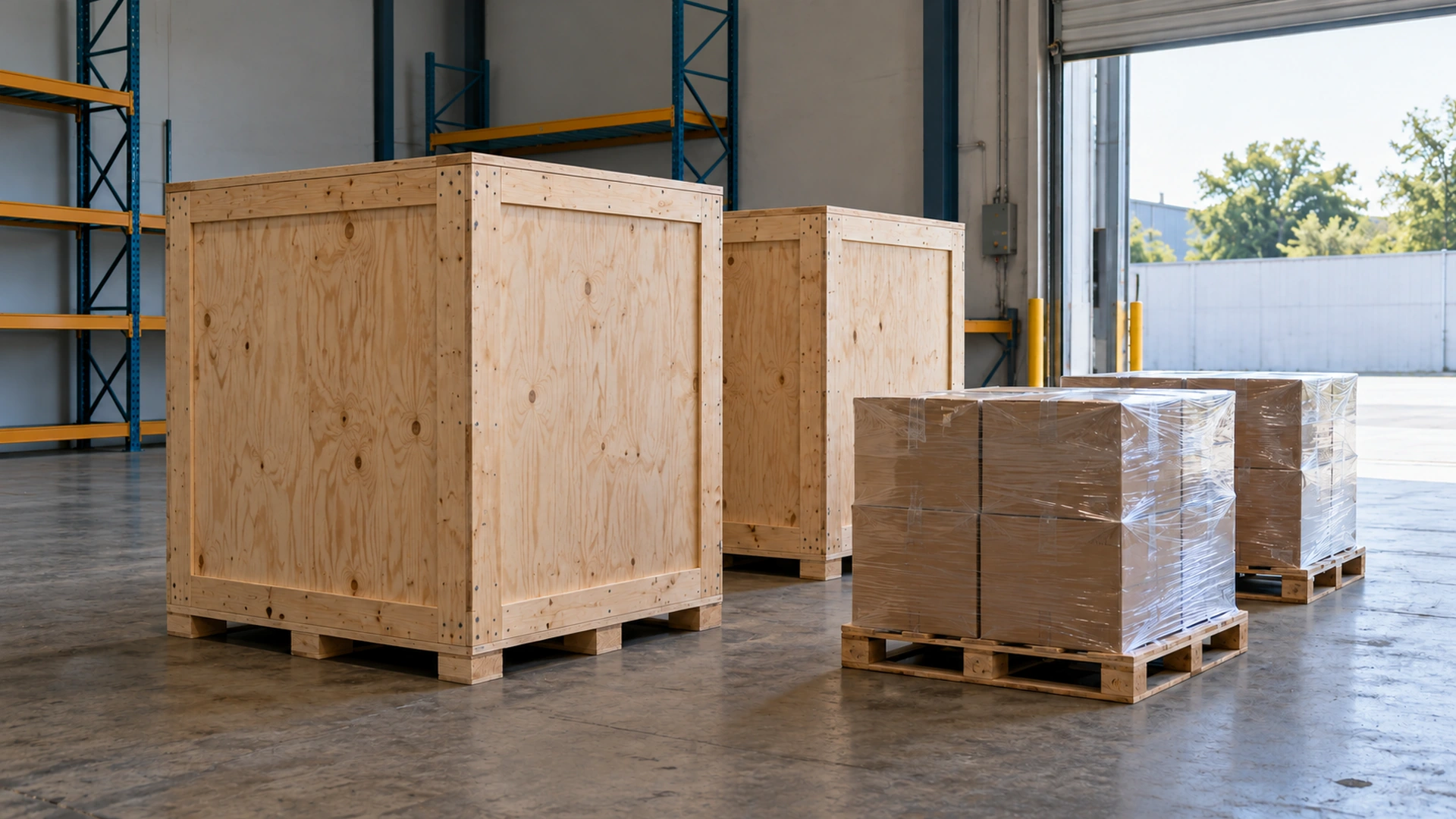
A machine price that leaves freight or duty off the page costs more when those bills arrive. Compare industrial equipment import costs by marking each line included, separate or unknown, then writing who pays and which document shows it.
On Determine Total Export Price, retrieved 11 October 2026, the U.S. International Trade Administration (ITA) defines landed cost as the total price of a product once it has arrived at the buyer’s door. The parts it lists are the original product price, insurance, freight, tariffs and taxes, and other fees. ITA says to call that total an estimate: tariffs and taxes can change, and a customs broker or a shipping company can add charges. The page is written for U.S. exporters estimating what a foreign buyer pays at the door. The first sheet below uses that definition and stops where it stops.
The second sheet starts at the door. Unloading, placement, connections, commissioning, training and first spare parts are lines a buyer still has to assign before the machine can run. ITA’s landed-cost definition does not price them.
Copy both sheets. Fill them from the two quotes and from the forwarder or broker papers you already hold. Write one of three words in the status cell: included, separate, or unknown. A cell marked (blank) is waiting for that word, a name, or a document. These sheets are a comparison record. They supply no duty rate, freight price, broker fee, or exchange rate.
| Record | Where it stops | Status words |
|---|---|---|
| Arrival, through the buyer’s door | Product price, insurance, freight, tariffs and taxes, other fees | Included, separate, or unknown |
| After arrival, until the machine can run | Unloading, placement, connections, commissioning, training, first spares | Included, separate, or unknown |
What does the arrival total include?
ITA’s doorstep total is an estimate, and the contract decides much of who pays it. On the same page, ITA says the Incoterm in the sales contract often determines whether the seller or the buyer pays the duties and taxes. CIF, ITA says, means cost, insurance and freight, and many tariff and tax calculations use the CIF value. Copy the trade term as the contract writes it. If the quote names no term, the duty-payer cell stays unknown. If the importing country’s lookup uses a basis other than CIF, write that basis in the document cell beside the term.
ITA says the customs authority in the destination market assesses duties when the goods arrive, and that taxes and other charges are calculated separately. Duties get their own row. Taxes and customs fees get the next. ITA tells exporters to begin with the importing country’s Harmonized System code before looking up a tariff. Write the code your papers actually use, and the date of the lookup. Leave the amount as (blank) until that dated paper is in the file.
ITA also lists situations an exporter can take up with the importing country: a trade-agreement rate, a small-value shipment, an ATA carnet, and a free-trade zone. Add one of those to the sheet only when your own papers name it.
Common mistake: Putting a duty figure into the row because a general article quoted one for a different product.
Takeaway: An arrival total without a named trade term, a classification and a lookup date is still an estimate with open cells.
How do you record what each quote includes?
Use one row per charge. For each quote, write included, separate, or unknown, who pays, the currency printed on that quote, the document and its date, and the person who can close a blank cell.
When the supplier is a small factory, the sales channel decides who owns the goods and who arranges the shipment. How small manufacturers build international sales channels lays out those roles.

The printed table has one set of blanks. Add a column for the second quote, or fill the sheet twice and put the copies side by side. Split the freight rows only when the two quotes cut the journey in different places. When both quotes show a single freight figure, keep one freight row.
| Cost line | Included, separate, or unknown | Who pays | Quote currency | Document to attach | Who confirms |
|---|---|---|---|---|---|
| Machine price | (blank) | (blank) | (blank) | Supplier quote, with date and line | (blank) |
| Export packing, when the quote separates it | (blank) | (blank) | (blank) | The quote, or the packing note | (blank) |
| Freight to the export port | (blank) | (blank) | (blank) | Quote or forwarder paper, with date | (blank) |
| International freight | (blank) | (blank) | (blank) | Quote or freight paper, with date | (blank) |
| Freight from the import port to your site | (blank) | (blank) | (blank) | Quote or delivery paper, with date | (blank) |
| Insurance | (blank) | (blank) | (blank) | Policy or the quote line, with date | (blank) |
| Trade term in the contract | (blank) | (blank) | (blank) | Contract clause, copied as written | (blank) |
| Tariffs and duties | (blank) | (blank) | (blank) | Classification, lookup and date | (blank) |
| Other taxes and customs fees | (blank) | (blank) | (blank) | The same lookup, or the broker paper | (blank) |
| Charges a broker or carrier adds | (blank) | (blank) | (blank) | Their estimate or invoice, with date | (blank) |
Quote A prints one machine price and states that international freight is included. Quote B prints a machine price and a separate international-freight line. On the sheet, quote A’s freight status for that leg is included, inside the machine price. Quote B’s freight status is separate. Set the offers side by side only after both machine prices and quote B’s freight figure are on the row. Quote A’s freight does not get added a second time.
Takeaway: The status word, the payer and the document belong on the same row. A price with no document stays unknown.
What belongs on the sheet after the machine arrives?
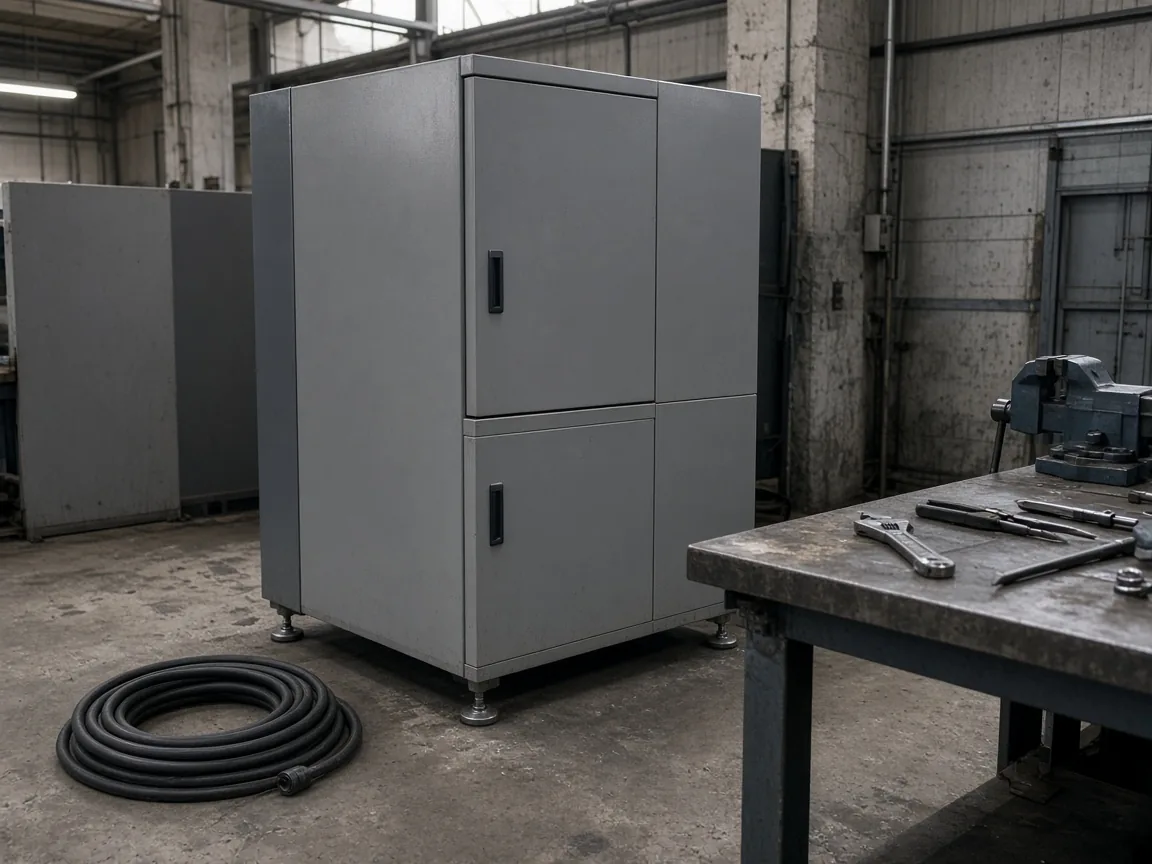
A quote can be the lower doorstep number and the more expensive machine to start. Park the lines that make the machine usable on the second sheet. If the quote says installation is available and gives no line and no exclusion, mark that row unknown.
| Cost line | Included, separate, or unknown | Who pays | Quote currency | Document to attach | Who confirms |
|---|---|---|---|---|---|
| Unloading at your site | (blank) | (blank) | (blank) | Quote or the rigger’s paper | (blank) |
| Placement on the floor | (blank) | (blank) | (blank) | Quote or the rigger’s paper | (blank) |
| Foundation or floor work | (blank) | (blank) | (blank) | Site note, or the quote’s exclusion | (blank) |
| Power, air or water connections | (blank) | (blank) | (blank) | Quote, or your facilities note | (blank) |
| Installation labor | (blank) | (blank) | (blank) | Quote line, or a written exclusion | (blank) |
| Commissioning and the acceptance run | (blank) | (blank) | (blank) | Quote, including what counts as accepted | (blank) |
| Operator training | (blank) | (blank) | (blank) | Quote line | (blank) |
| First spare parts | (blank) | (blank) | (blank) | Spare-parts list, with date | (blank) |
| A permit the quote itself names | (blank) | (blank) | (blank) | The clause that names the permit | (blank) |
Add a permit row only when the quote names the permit. Country licensing lists are outside this page.
Takeaway: Label the total you are comparing. An arrival estimate and a ready-to-use estimate answer different questions.
How do you keep the same charge from being counted twice?
Work one cost line at a time.
- When quote A folds freight into the machine price and quote B lists freight underneath, write that bundle in the document cell before you treat the two machine prices as the same kind of figure.
- When both quotes include the same freight leg, record that leg once. A second freight paper for the same leg checks the figure. It is a second document, and it is one charge.
- When neither quote names duty, both duty cells stay unknown. Leave them unknown until you have this product’s classification in this country, with a date.
- Finish the arrival rows before you add the second sheet. Then name the total: arrival estimate, or ready-to-use estimate.
Keep each quote’s currency as printed. When the currencies differ, write both, and use the rate and the date your finance lead already uses. This page has no exchange rate.
ITA’s instruction still covers any total you build from the first sheet: call it an estimate. Hand an unknown row to the person named in the last column, and wait for the document.
Common mistake: Picking the lower machine price while duty and installation are still unknown on one quote.
Takeaway: The comparable figure is the one where both quotes carry the same lines as included or separate, in named currencies, with the unknown lines still visible.
Where this record stops
Use the sheets to compare charges on the papers you have. Machine selection sits outside them. So does a customs valuation or a binding classification. ITA says the destination customs authority assesses the duty. A broker can prepare the papers. The authority’s assessment is the figure that gets paid.
The worked example on the ITA page uses sample prices and sample percentages for an exporter’s illustration. Those figures stay in that example, under the rates the example states. They are not copied onto these sheets, and they are not industrial-equipment rates.
A specific import license, a particular classification code, and the quotes on your desk are inputs you bring. The cells stay blank until those papers are attached.
How we researched this
The landed-cost definition, the five parts of that total, the meaning of CIF, the role of the Incoterm in who pays duties and taxes, and the instruction to call the total an estimate come from ITA’s page “Determine Total Export Price,” retrieved 11 October 2026. The sample prices and sample percentages on that page stay in its worked example.
Commercial pages that rank for this query already list freight, taxes and clearance steps, and one of them already walks through a landed-cost calculation. Their price tables stay off this page. The sheets here are the record those guides skip: included, separate or unknown, the payer, the currency and the document, with arrival and ready-to-use kept apart.