A unit cost that drops factory overhead, or that spreads overhead on the wrong base, puts a price on a bid that cannot cover the plant. AccountingCoach defines product cost as direct material, direct labor and manufacturing overhead, and says a mismatched allocation makes the cost per unit wrong.
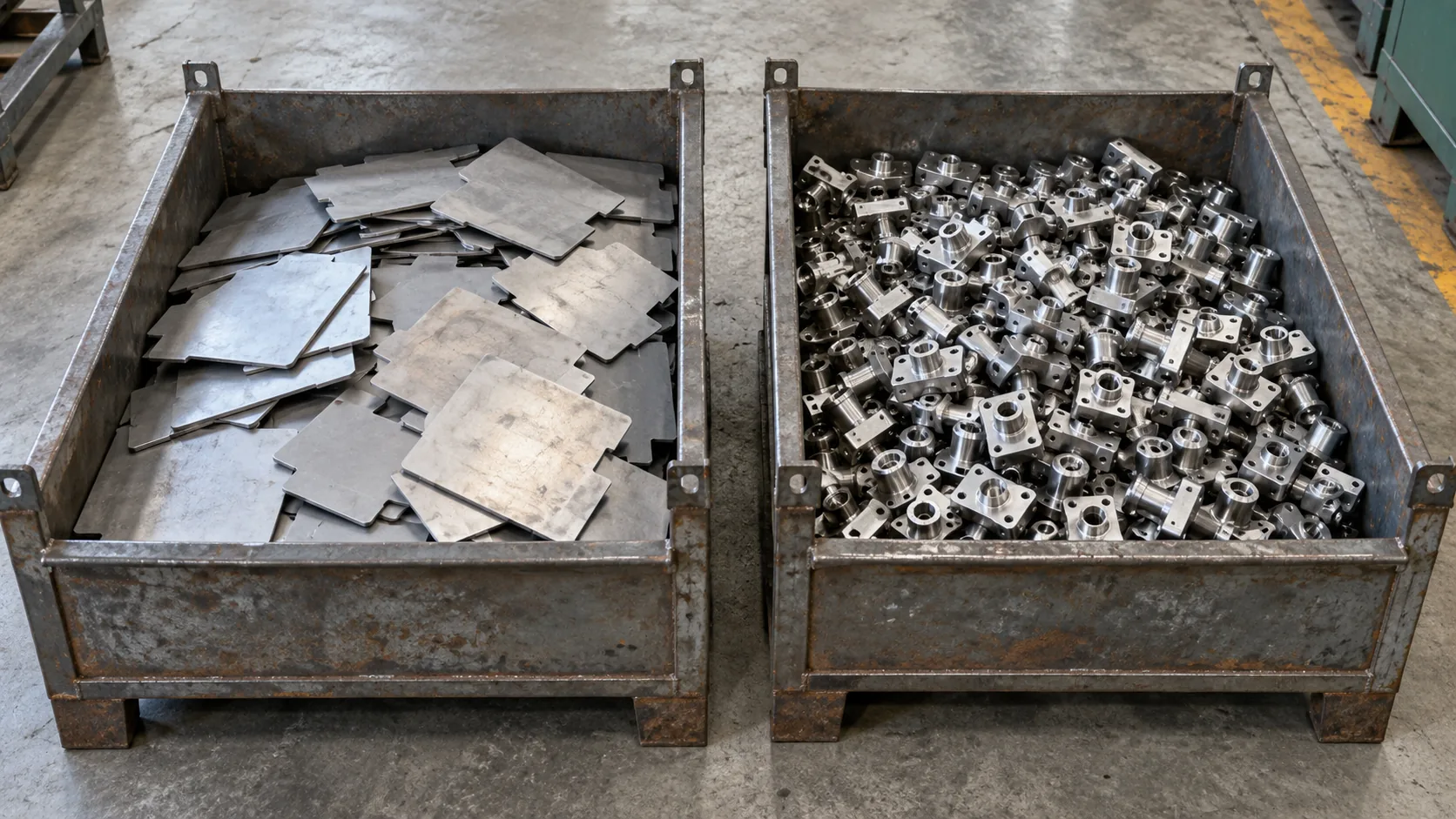
The photograph is a generic desk and parts tray. It is not a cost record and it shows no dollar amounts.
Figures below come from two public texts fetched on 20 October 2026: OpenStax Principles of Accounting, Volume 2, sections 4.2 and 4.4, and AccountingCoach’s manufacturing-overhead explanation. They are textbook illustrations. They are not a quote from a named factory.
Add the three manufacturing costs, then divide
OpenStax states that the costs of a manufactured item are direct materials, direct labor and manufacturing overhead. Direct materials are traced to the product. Direct labor is wages, payroll taxes and benefits for people who work on that product. Everything else that supports production, and is not those two, is overhead: indirect materials, indirect labor, and items such as factory depreciation, maintenance, insurance and utilities. Selling and administrative salaries stay out of manufacturing overhead.
AccountingCoach’s glossary line matches that product-cost definition. It then draws the line that unit economics actually needs: nonmanufacturing costs are not assigned to inventory or cost of goods sold, but the selling price has to exceed product cost plus those nonmanufacturing costs and expenses.
The formulas are:
Manufacturing cost of the job or period = direct materials + direct labor + applied manufacturing overhead
Unit manufacturing cost = manufacturing cost / good units in that same job or period
Applied overhead = predetermined overhead rate x actual amount of the allocation base
Predetermined overhead rate = estimated manufacturing overhead / estimated amount of the allocation base
| Cost | Where it goes in the books | Dominant failure mode and prevention |
|---|---|---|
| Direct material | Job cost sheet when the requisition moves it into work in process | Counting indirect items such as glue or fasteners as if each unit were traced. Prevent it by leaving low-value items in overhead when tracing them costs more than the number is worth. OpenStax uses sign adhesive and furniture nails as that case. |
| Direct labor | Time ticket charged to the job, including taxes and benefits | Charging a supervisor’s time as direct labor. Prevent it by keeping supervision in overhead unless that person works the product. |
| Manufacturing overhead | Applied with a rate, then cleared against actual overhead | Using a labor-hour rate after machines, not people, drive the overhead. Prevent it by changing the base when the correlation breaks. |
| Selling, administration, interest | Period expense, not inventory, on AccountingCoach’s line | Folding them into the unit “factory” cost, or ignoring them when setting a price. Prevent it by keeping a second total for the price. OpenStax’s Dinosaur Vinyl estimate is a textbook exception: the $250,000 overhead figure includes $25,000 of interest. Use that figure when you are reproducing job MAC001. Keep interest out when you follow AccountingCoach. |
Rule of thumb: If a product uses few labor hours and many hours in a high-overhead department, a single plant-wide labor rate assigns too little overhead to that product. AccountingCoach’s machine-hour illustration puts the plant-wide rate at $33.33 per machine hour ($500,000 divided by 15,000 machine hours) and the departmental rates at $40 in machining and $20 in finishing. A part that lives in the $40 department is undercosted on the single rate.
Takeaway: Write the three manufacturing terms first. Divide only by the good units that absorbed those terms.
Worked example from OpenStax job MAC001
OpenStax walks one custom sign, job MAC001, at a fictional company called Dinosaur Vinyl. The amounts below are the textbook’s, checked against sections 4.2 and 4.4 on 20 October 2026.
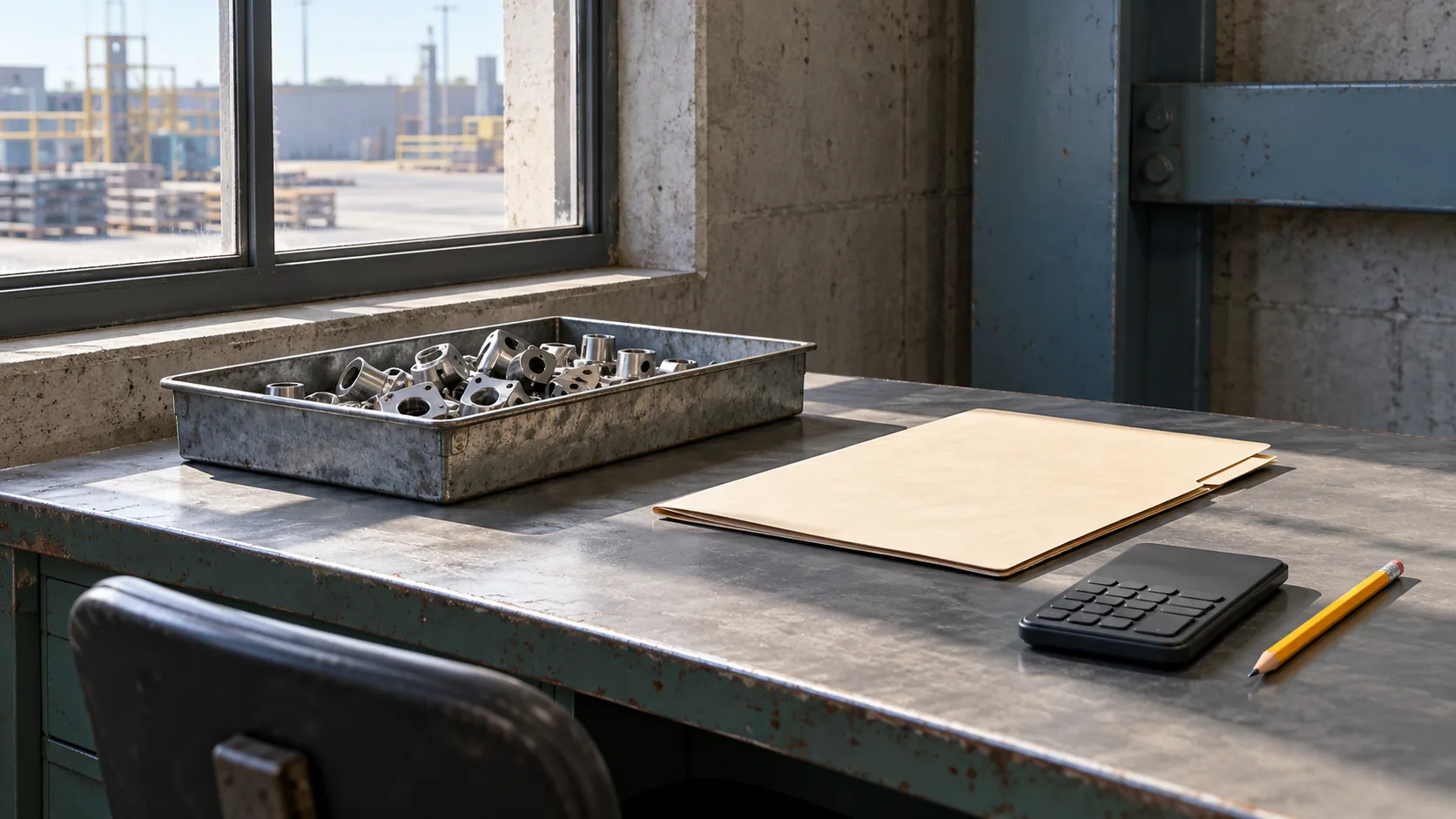
Direct materials assigned to the job include $300 of vinyl, $100 of black ink, $60 of red ink and $60 of gold ink. The work-in-process figure then shows direct material costs of $520 and $180. Direct labor is two people for one hour at $15 in production ($30) and two people for one hour at $18 in finishing ($36). Combined direct labor on the job is $66.
The company estimates annual overhead at $250,000 and estimated direct labor cost at $100,000. The rate is $2.50 per direct labor dollar. Applied overhead is $2.50 times $66, which is $165. That $250,000 estimate, in OpenStax Figure 4.17, includes a $25,000 interest line. AccountingCoach keeps financing out of product cost. The $2.50 rate below follows the textbook’s own estimate, interest line included. It is not a claim that interest belongs in every factory’s overhead pool.
Worked example. Job manufacturing cost = 520 + 180 + 30 + 36 + 165 = 931 dollars. The textbook presents one sign job, so good units = 1 and unit manufacturing cost = 931 / 1 = 931 dollars per sign. The same arithmetic on a repeat job of 10 signs that truly absorbed $931 would be 931 / 10 = 93.10 dollars per sign. Do not use 10 unless the cost sheet is actually for 10 signs.
At year end the applied overhead rarely equals actual overhead. OpenStax says the two should be close and that an exact match is rare. A unit cost built in March from the $2.50 rate is an applied cost. It is not a promise that the year’s actual overhead per labor dollar stayed at $2.50.
When the statements are fine and the price is not
AccountingCoach separates two uses of the same overhead dollars. For external statements, GAAP requires manufacturing overhead inside work-in-process, finished goods and cost of goods sold. If the plant sells nearly everything it makes, and beginning and ending inventories are similar, most of the overhead still lands on the income statement even when the split among products is clumsy. The statements can look acceptable.
For a price, that clumsy split is the failure. Too much overhead on one product invites a price increase the product does not need, and customers take the order elsewhere. Too little overhead hides a selling price that does not cover the factory. AccountingCoach’s older labor-hour logic was that a product with 30 direct labor hours should carry twice the overhead of a product with 15, back when labor and overhead moved together. Once machines replace labor, that doubling stops being a cause-and-effect link. The text’s response is a machine-hour rate, then a rate per production department after service departments such as maintenance and factory administration are allocated into those departments.
Department rate = (department’s own costs + service-department costs assigned to it) / that department’s machine hours
The plant-wide alternative in the same illustration is the $33.33 per machine hour above. Products that spend time in the expensive department pick up more cost on the departmental rates than on the single rate. Products that spend time in the cheaper department pick up less.
What the unit price still has to clear
Factory unit cost is the wrong denominator for a customer price. AccountingCoach lists salaries outside manufacturing, selling costs and financing as items that never enter product cost. They hit the period in which they occur. Interest on the income statement is the cost of money used during the period, not the cash interest paid that month.
A practical second total is:
Price floor = unit manufacturing cost + nonmanufacturing cost assigned to that unit + the margin the business requires
The nonmanufacturing assignment is a management calculation. AccountingCoach says it is not the assignment used on external inventory. Keep the two totals in separate columns so a GAAP inventory value is not quietly rewritten as a “full cost.”
Cash that never enters the overhead pool still changes whether the unit is worth making. Freight, duty and the work to make an imported machine run are documented on the import cost sheets. Factory maintenance can be overhead or a separate reliability spend. The machine-level maintenance cost comparison is the place to test that spend before anyone buries it in a single overhead rate. If the labor hours that drive the overhead rate are collected on the floor, the digital manufacturing record is what makes those hours attach to a job instead of to a weekly guess.
Takeaway: Report the factory unit cost and the price-floor total as different numbers. A single blended “cost” hides which one moved.
How this page was checked
OpenStax sections 4.2 and 4.4, fetched 20 October 2026, supply the three cost categories, the MAC001 material and labor amounts, the $250,000 estimate (including the $25,000 interest line in Figure 4.17), the $100,000 labor estimate, the $2.50 rate and the $165 application. The $931 total and the per-sign division are arithmetic on those stated amounts. AccountingCoach’s manufacturing-overhead explanation, fetched the same day, supplies the product-cost definition, the GAAP inventory treatment, the 15-hour versus 30-hour labor example, and the $500,000 / 15,000 machine-hour plant-wide rate of $33.33 beside departmental rates of $40 and $20. An Investopedia page requested the same day returned HTTP 402 and is not used.