
Industrial clusters are geographic concentrations of connected businesses and supporting institutions with related activities, challenges and opportunities. Confusing a group of nearby factories with a connected cluster can lead to the wrong conclusions about local capabilities. A manufacturing cluster brings those connections into production: component suppliers, specialist workshops, manufacturers, training providers and other services operate within reach of one another.
Nearby factories alone do not demonstrate a connected industrial cluster. To assess a claim, look for transactions, skills flows and services that firms actually use. This guide provides an evidence worksheet for that investigation; it does not assign a cluster score or predict local growth.
How manufacturing clusters develop
Clusters can develop as related firms, specialist skills and services accumulate in a place, and relationships make that location useful to further businesses. There is no universal starting point or fixed sequence. The following mechanisms explain what to investigate, rather than stages every district must pass through.
Related production creates opportunities for suppliers. A manufacturer needs inputs and services. Local businesses may specialize in particular components or processes, serving several customers or a dominant producer. Burlington’s 2022 explanation uses boat manufacturing to connect final producers with materials, engines, design services and marine training. The useful question is which of those links operate in the place you are examining.
Skills and support can become shared resources. Vocational schools, universities, business associations and service providers belong in the picture when they help firms address related needs. A nearby college is a potential connection; evidence that employers use its training is a stronger observation. UNIDO includes these supporting institutions in its cluster framework.

Repeated cooperation can make connections more useful. Joint purchasing, shared equipment or collaborative projects are possible forms of collective action. UNIDO’s 2020 technical paper, especially pages 26–29, describes trust, coordination and governance as matters that require attention. Being close may help people cooperate, but does not settle who pays, who benefits or how commitments are enforced.
This distinction matters when reading development announcements. A new site, training agreement or business association may create an opportunity for connections. Evidence of use is needed before describing the promised network as operational.
Co-location and economic connections: what is the difference?
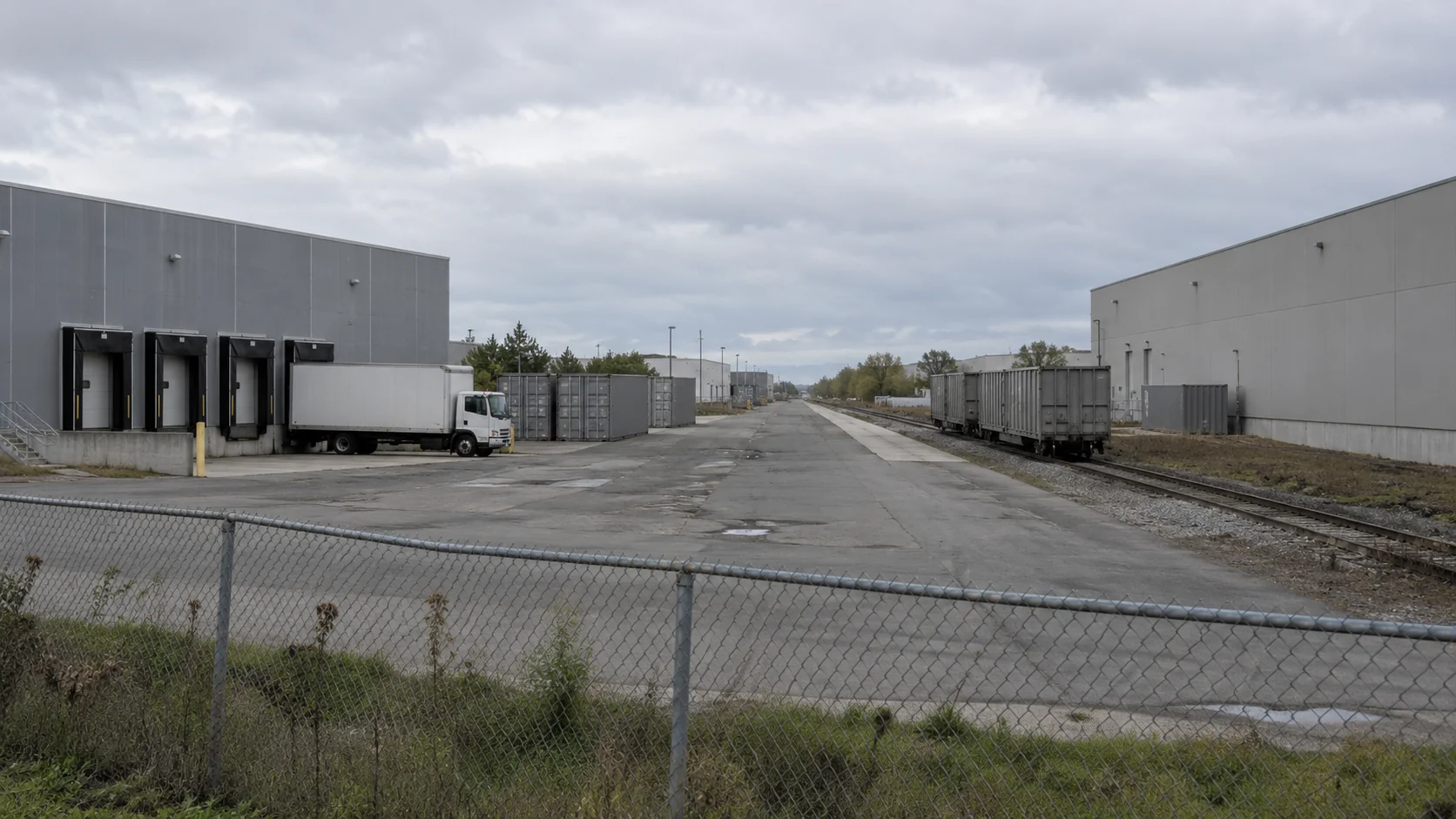
Co-location describes where firms are. Economic connections describe what moves between them or what they use together. An industrial park can provide a setting for a cluster, but its tenant map does not establish a production network. Conversely, connected businesses need not occupy one formally designated estate.
UNIDO notes that there is no universally accepted exact boundary for a cluster. Define the area and activity you are examining, and state why they belong together. Do not impose an arbitrary distance threshold or assume that a municipal boundary captures every relevant relationship.
| Observation | What it establishes | What still needs checking |
|---|---|---|
| Several factories occupy the same estate | Geographic proximity | Whether their activities are related and whether they interact |
| A directory lists component makers and assemblers | Potentially complementary capabilities | Which firms supply which customers, and for what work |
| A college offers a relevant course | Training is available | Whether local firms help shape it, recruit from it or use it |
| Firms belong to the same association | A shared organizational affiliation | Whether they undertake joint work or use its services |
| Plants use a common road or terminal | Shared infrastructure access | Whether there are joint services or meaningful production links |
Keep a photograph, a directory entry and a confirmed commercial relationship as different kinds of evidence. None can substitute for the others.
Different cluster types have different connections
There is no single network pattern to search for. The academic reference Types of Manufacturing Clusters, adapted from Ann Markusen’s 1996 typology, distinguishes these arrangements:
| Type | Organizing pattern | Evidence question |
|---|---|---|
| Marshallian district | Specialized smaller firms divide work through competitive and complementary relationships | Do firms exchange work, inputs or specialist services across the district? |
| Hub-and-spoke cluster | Suppliers organize around one or several core firms | Which supplier relationships depend on the anchor producer? |
| Satellite platform | Branch plants share a location while belonging to separate external supply chains | Which links are local, and which run mainly to parent companies or distant partners? |
Limited local purchasing in a satellite platform does not mean the factories are inactive. It means the pattern of connections differs from a dense network of local specialists. Equally, an anchor-led cluster need not contain extensive trading among its smaller suppliers.
For named manufacturing examples, UNIDO’s 2020 paper identifies the Sassuolo ceramic cluster in Italy and the Tangier automotive cluster in Morocco on page 18. These are examples named in that publication, rather than a current ranking or evidence that another locality will reproduce their outcomes. Assessing either place today would require current records.
Copyable worksheet: find the links behind the claim
Choose a manageable activity, such as metal components for local equipment makers, and define the area. Copy the table into a document, record the review date and leave unverified evidence cells blank. The prompts are an editorial aid for collecting information, not an official evaluation standard.
| Connection | Observation to investigate | Record or confirmation to seek | Evidence and date | Next request and owner |
|---|---|---|---|---|
| Suppliers | A local firm supplies a related producer | Permissioned or redacted order records, delivery records, or confirmation from the parties identifying the input and relationship | ||
| Skills | Related employers draw on shared training or occupational skills | Employer participation, placement records or documented training use, with personal information protected | ||
| Institutions | Firms use a school, association, laboratory or other support service | Completed service records, project participation or confirmation of actual use | ||
| Infrastructure | Firms use common facilities or coordinate access to services | Service arrangements and use records identifying the facility and participating firms |

For each entry, record who supplied the information, the period it covers and what it actually establishes. A firm may confirm that it bought a component locally without revealing its spending. That supports the existence of a link; it does not establish the share of its purchases sourced locally.
Training needs the same care. Course availability, employer participation and employment outcomes are different observations. Our guide to evaluating digital skills training outcomes explains how to distinguish participation from demonstrated outcomes.
Infrastructure also needs a defined scope. For businesses serving overseas customers, port and inland logistics extend the investigation beyond the estate boundary. A shared export route can matter even when neighboring firms do not buy from one another.
How to interpret an incomplete worksheet
Write a conclusion at the level the records support. Distinguish an observed or documented link, a relationship reported by a participant, and a connection that remains unknown. These descriptions preserve uncertainty without turning missing evidence into a negative finding.
For a hypothetical example, suppose a district directory lists machining firms, an assembler and a technical college. An assembler then confirms a local component purchase, while the college provides a course catalogue but no employer-use information. The defensible conclusion is that one supplier link is reported and a relevant training offering exists. Shared hiring, extensive subcontracting and stronger regional performance remain unestablished.
The next request should address the missing connection: ask the supplier to confirm the work, or ask the college which employers use the course. Do not sum unlike observations into an invented maturity score.
Connections do not prove economic success
UNIDO explicitly warns that geographical agglomeration does not automatically deliver strong economic performance. Establishing relationships is also different from proving that those relationships caused higher productivity, better jobs or environmental gains. Such claims require an outcome, a time period and an appropriate comparison that this worksheet does not provide.
Connections can carry dependencies. The OECD’s 2007 review of cluster policies, on page 33, discusses exposure to common market shocks, the departure of a core firm and difficulty adapting after specialization. Those risks are reasons to examine the network’s structure, not predictions about a particular district.
For a manufacturer, several nearby suppliers may still depend on one upstream facility or route. Use the supply chain concentration worksheet to investigate that separate purchasing question. For a regional reader, the useful output here is a dated account of documented connections and unanswered questions, with no growth multiplier attached.
Method and sources
We read UNIDO’s 2020 cluster-development paper, Burlington’s October 2022 government explainer, the manufacturing-cluster typology published by The Geography of Transport Systems and the OECD’s 2007 policy review. Sources were accessed in October 2026; their publication dates remain relevant when interpreting examples and policy discussion.
The comparison and worksheet translate those sources into evidence requests. We conducted no local fieldwork, transaction audit or causal impact evaluation. No current cluster ranking, local sourcing percentage, employment forecast or achieved emissions result is asserted. The photographs depict workshop settings and do not document the named clusters or their relationships. Read more in World and our editorial policy.