
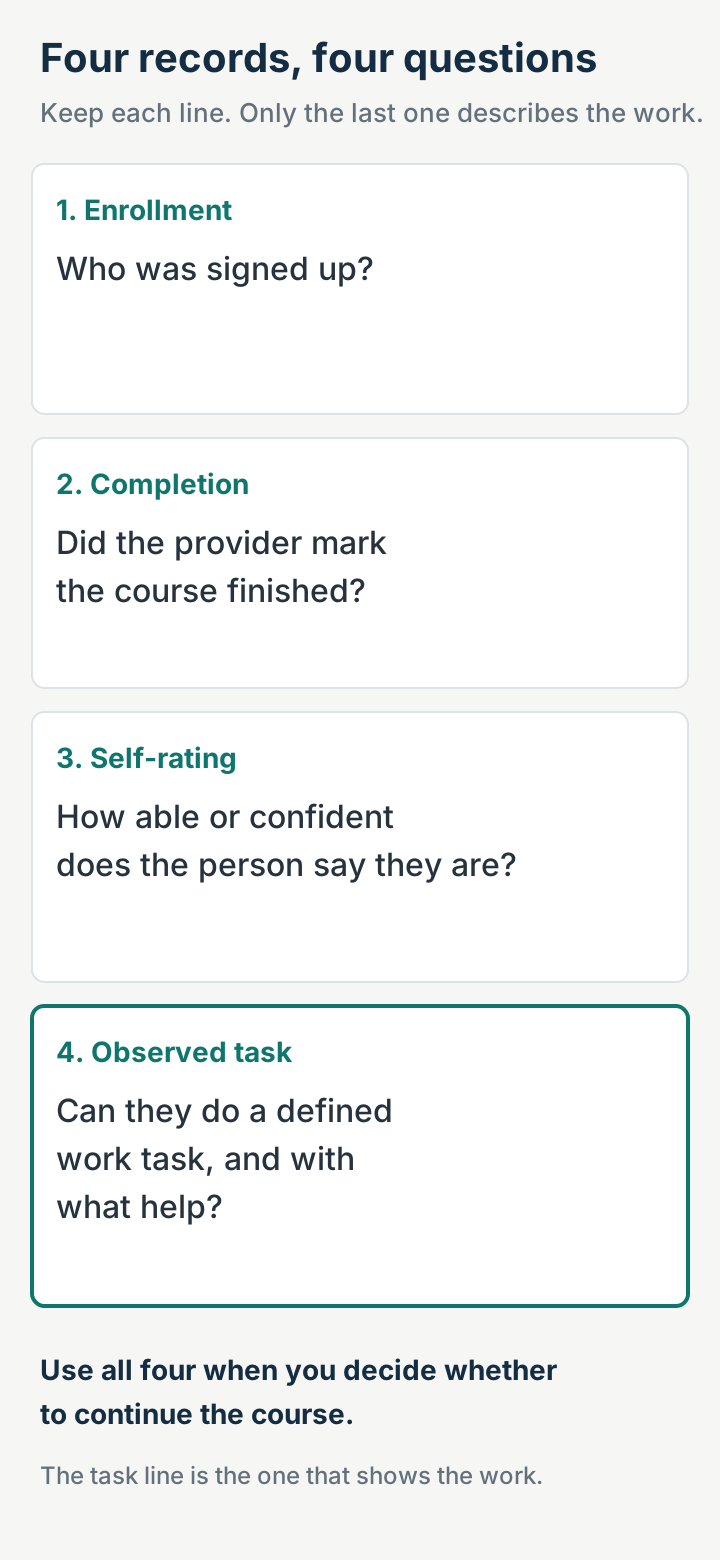
To decide whether to continue a digital skills course, write four records on separate lines: who enrolled, who the provider marked as finished, how confident people say they are, and whether they can complete one defined work task with a stated amount of help. Using the wrong record treats a completion mark, or a rise in confidence, as if the work itself had changed. When the device, the connection, permission to do the task, or the amount of help also changed, mark that row “cannot judge” and leave the cause open.
This Progress explainer is for someone deciding whether to run a course again for people whose jobs are not in technical roles. The blank sheet below is the working product. The page leaves out course rankings, promises about jobs or pay, any treatment of a self-rating as hands-on work, official DigComp certification, and medical training.
| Record | The question it answers | What remains open |
|---|---|---|
| Enrollment | Who was signed up? | Whether they attended, finished, or can do the work |
| Completion | Did the provider mark the course finished? | Whether the person can do a work task |
| Self-rating | How able or confident does the person say they are? | Whether an observer saw that task completed |
| Observed task | What did the person do on a defined task, with what help, before and after? | Whether the course caused the difference |
Four records that answer four questions
A brief from the CREATE Adult Skills Network, published through JSI, describes three ways adult-education programs assess digital skills: self-assessment, skill-based assessments such as the Northstar Digital Literacy modules, and performance-based assessments built from a framework that fits the skills you want to see. The brief says self-assessments are not valid measures of skill, citing van Laar et al. (2020). They give people a chance to reflect on the technology they use and the skills that make that use possible, and the brief says they are generally designed to support agency and self-directed learning. Put that reflection on the self-rating line.
A performance-based assessment, in the definition the brief quotes from a 1992 report to the US Congress, requires the person to create an answer or product that demonstrates their knowledge and skills. The brief says this kind of check can cover skills that multiple-choice items miss, and that for digital literacy the aim is to follow progress on authentic tasks. Those tasks can ask the person to construct a response, demonstrate a skill while someone watches, work through a problem, or add work to a portfolio. People running a program can use them to set a baseline or to note growth over time. They take more labor than a survey. That labor is the observed-task line.
Completion is the mark a provider records. The brief does not treat that mark as a performance assessment.
The Behavioural Insights Team account of work with FutureDotNow, supported by the UK Department for Science, Innovation and Technology, looks at why employees take up digital skills training. The barriers it names include lack of time, lack of permission, low confidence, fear of breaking something, and treating digital skills as separate from the job. It recommends peer mentors, and training built around the goal of the job rather than around the name of a tool. Uptake and motivation are the subject of that account. A longer signup list is a different record from a finished work task.
BSD Education’s school profile starts from a list of competencies, a self-assessment survey, a review of curriculum and teaching, and classroom observation. That produces a picture of a school. It does not give you a before-and-after file for an adult employee’s work task.
First Intuition’s note of 10 November 2023, written for accountants, walks through why the business wants to change, which skills are missing, which technology is involved, and who can help. That sequence identifies a training need. It stops before the question of whether a course that already ran changed the work.
Common mistake: Copying the provider’s finished mark into the task line. The finished mark answers the completion question. The task line needs the work file or an observer’s note.
Takeaway: Enrollment, completion, self-rating and the observed task stay on separate lines, including when they all come from the same course.
Name the task before you compare anything
DigComp 3.0 is the fifth version of the European Digital Competence Framework, from the European Commission’s Joint Research Centre. It defines a task as a specific activity that uses digital technologies and contributes to a goal, in everyday life, work, or learning. Tasks vary in size, duration and complexity. People may carry them out alone or with others.
Proficiency in DigComp 3.0 combines the cognitive demand of the task, its complexity, and how much autonomy the person has. The framework uses four levels:
| Level | DigComp 3.0, paraphrased |
|---|---|
| Basic | The person remembers and carries out simple tasks, with guidance as needed |
| Intermediate | The person identifies and carries out well-defined tasks, and solves well-defined problems, on their own |
| Advanced | The person assesses and applies solutions to a variety of complex tasks on their own, adapts them to different contexts, and guides others if required |
| Highly advanced | The person assesses and resolves highly complex or specialized problems, creates new solutions or adapts existing ones, and leads others if required |
Use a level to describe the task you picked: how complex it is, and whether the person needed someone beside them. The level describes that task. It is not a score for the course, and this page does not calculate one.
Learning outcomes in DigComp 3.0 are statements of what a person knows, understands and is able to do on completion of a learning process, written as knowledge, skills and attitudes. The Joint Research Centre describes them as a tool for writing or revising course content, for recognizing formal and informal learning, and for signaling skills in an occupational profile. A sentence in a course outline is the designer’s statement. Your sheet records a task you can point to.
The framework has five competence areas and 21 competences. AI-related knowledge, skills and attitudes appear in all 21. An area such as managing information, or protecting devices, can help you name the kind of task. The area name does not measure the course.
The Joint Research Centre lists prerequisites for reaching the basic level: a basic level of literacy; access to a sufficiently fast and stable internet connection; one or more digital devices with the required connectivity and applications; and technical assistance, guidance and support. If one of those was absent at the baseline and present at the later check, or the reverse, the task row has more than one explanation. Write “cannot judge” on that row.
Takeaway: Name one work task, say how much guidance it needed, and use that same description at the baseline and at the later check.
The sheet to copy
The sheet is an editorial recording aid. We have not run a trial of it. The test claims the Joint Research Centre publishes for DigCompSAT belong to that instrument. They do not attach to these headings.
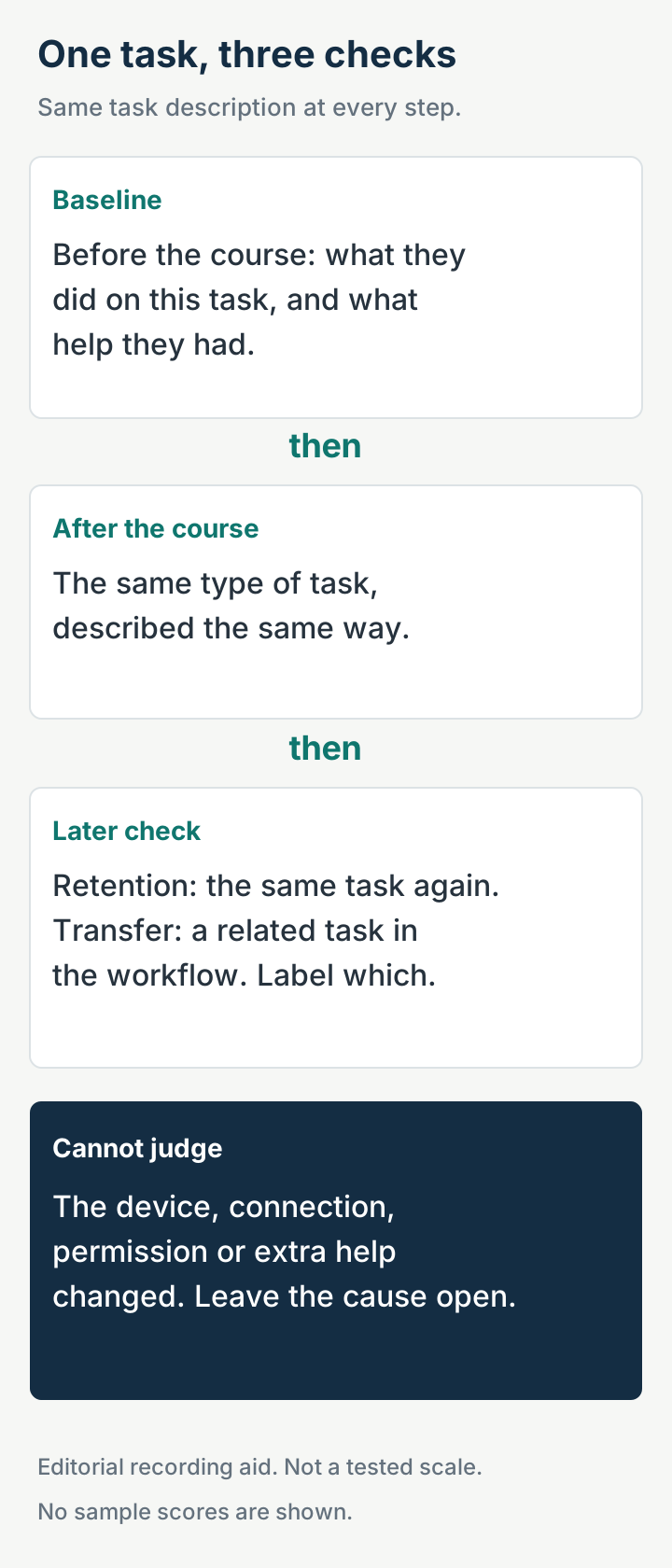
Copy the left-hand column into a spreadsheet as column headings. Add one row per task. Write “unknown” when you do not have the file.
| Heading | What to enter |
|---|---|
| Task | The work activity, in the tools the person actually uses |
| Baseline performance | What they did on that task before the course, including where they stopped and what help they had |
| Same type of task after the course | The closest repeat you can arrange after the course, described the same way |
| Retention or transfer check | Either the same task again after a gap you choose (retention), or a related task in the real workflow (transfer). Write which one, and the date you looked |
| Support required | The device, the connection, permission to do the task, and anyone who helped, at each check |
| Evidence file | Where the file, the screenshot, or the observer’s note is kept |
| Cannot judge | What else changed. If you cannot separate that change from the course, leave the cause open |
- Pick a task the course was meant to support, small enough that someone can watch it or keep the file.
- Before the course, or from the last time the person did that task, write the baseline and the support they had.
- After the course, ask for the same type of task. A new topic is a new row.
- Later, look again. Retention means the same task. Transfer means a related task in the workflow. DigComp’s definition of a task allows either setting. They answer different questions, so label the one you used.
- If the device, the connection, permission, or the amount of help changed, fill “Cannot judge” and leave the cause open.
A learning outcome in the course outline can tell you which task was intended. It does not fill step 3.
Common mistake: Putting a quiz score in the after-course cell and a confidence number in the baseline cell. The quiz score can sit with completion. The confidence number is the self-rating. The task row needs the work product or the observer’s note.
Takeaway: One row per task, the same description at each check, and a cannot-judge note when the conditions changed.
DigComp 3.0 and DigCompSAT have different jobs
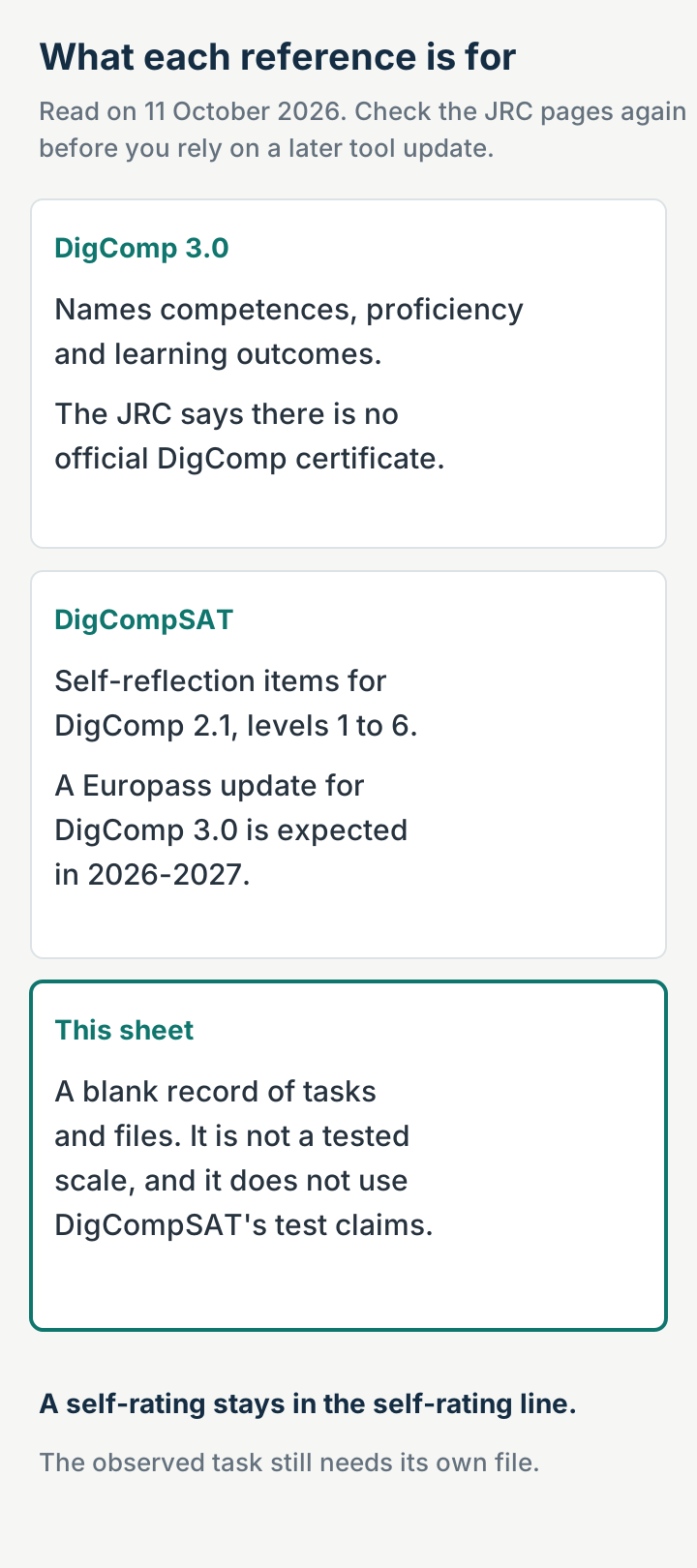
DigComp 3.0 keeps the five-area structure of the previous version. The Joint Research Centre lists updated wording, revised proficiency levels, new learning outcomes, and AI competence built across the framework. On its questions-and-answers page, the Joint Research Centre states that there is no official DigComp certification scheme. Other digital-skills certificates use DigComp as a reference. This page does not list those schemes. A certificate from one of them would still leave the observed-task cell empty.
DigCompSAT, on the Joint Research Centre’s assessment-tools page, is an item bank aimed at DigComp 2.1 competences for levels 1 to 6, which that page groups as foundation, intermediate and advanced. It asks people to reflect on knowledge, skills and attitude across the five areas. The Joint Research Centre says the tool can measure existing competence on the basis of that self-reflection, identify gaps, and raise awareness, and that it has sound psychometric properties, including validity and internal consistency of the items. It was piloted in Ireland, Latvia and Spain with people aged 16 to 65. Those statements describe DigCompSAT. They do not describe a spreadsheet copied from this page, and they do not describe a result of your course.
The same answers page says an update of the self-assessment tool on the Europass platform, based on DigComp 3.0, is expected during 2026-2027. Until then, the Joint Research Centre says anyone may use and adapt the existing DigCompSAT item bank. It also says a Commission working group on assessment of digital skills is developing guidelines expected in 2027. Read the JRC pages again before you treat DigCompSAT items as a reading of DigComp 3.0. The copies used here were saved on 11 October 2026.
A self-reflection score, including a later DigComp 3.0 version of the Europass tool, still answers the self-rating question. Keep it on that line.
Takeaway: Use DigComp 3.0 to name the task and the level of demand. Use DigCompSAT as a self-reflection instrument tied to DigComp 2.1, with the version limit above. Use this sheet to store the files.
When the comparison does not support a cause
Write the support down at the baseline and at the later check. DigComp 3.0 treats literacy, a stable connection, a suitable device and applications, and technical help as prerequisites for the basic level. The Behavioural Insights Team account adds time and permission as barriers to taking up training. A manager who newly allows the task, a laptop issued the same week, or a colleague who now sits with the person can move the task record while the course stays the same.
When you cannot separate those changes, the entry is “Cannot judge.” You may still continue the course for a reason this page does not weigh, such as a duty your organization already has or a tool it has already bought. That reason is separate from evidence that the course changed the work.
Common mistake: Reading a rise in confidence, or a fuller class list, as evidence the work changed. Confidence is the self-rating. The class list sits with enrollment and completion.
Takeaway: Treat a difference as a course result only when the task, the help and the tools are comparable and you have the files. Otherwise leave the cause open.
What this page leaves out
- Course rankings and lists of best programs. The sources used here do not compare providers.
- Employment, promotion and pay. None of those sources gives a figure to attach to a renewal decision.
- A self-rating standing in for hands-on work. The CREATE brief says self-assessments are not valid measures of skill.
- An official DigComp certificate. The Joint Research Centre states that there is no official DigComp certification scheme.
- Medical and clinical training. The sources cover general digital competence and adult or workplace digital skills.
- A measured result for any organization. The sheet is blank. This page reports no participant counts, completion rates or before-and-after scores.
How we researched this
We used the Joint Research Centre pages for DigComp 3.0, for DigComp-based assessment tools, and for questions and answers on DigComp, the CREATE Adult Skills Network brief on digital skills frameworks and assessments, and the Behavioural Insights Team’s account of its digital-skills training guide. The copies were saved on 11 October 2026. We also read BSD Education’s school-profile post and First Intuition’s 10 November 2023 note on identifying digital skills needs, and used them to mark questions this page does not take on. Percentages and prices printed on those pages are omitted. The worksheet has not been tested in a study. Corrections are described in our editorial policy.
The same split, between a count of activity and evidence that something was used, is how we read university research transfer in How universities help research reach real-world applications.
Takeaway: The sources define frameworks, assessment types and limits. They do not report a result for your course.